Benefits of Coloring for Children's Development
Coloring isn't just a quiet-time activity, it builds the fine motor skills, focus, creativity, and emotional regulation your child needs to thrive. Here's what the research actually says, plus free pages to get started today.
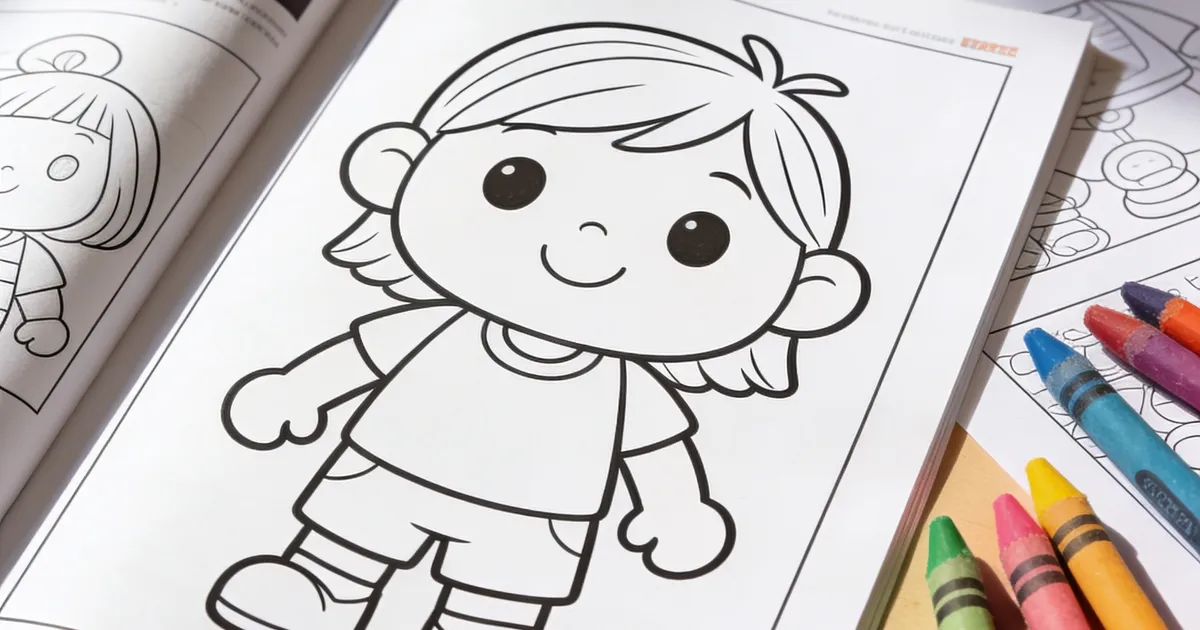

Your 4-year-old just spent 45 minutes completely silent, tongue out, filling in every scale on a dinosaur coloring page, and you're wondering if it's actually doing anything useful. It is. Coloring is one of the most quietly powerful developmental tools available to kids, and most of it looks like pure fun.
Fine Motor Skills That Last a Lifetime
Every time your child grips a crayon and steers it inside the lines, they're doing grip strength training. The small muscles in their hands and fingers, the same ones they'll later use for writing, tying shoes, and using scissors, get a genuine workout during coloring sessions.
According to the National Association for the Education of Young Children, drawing, scribbling, and coloring with crayons, pencils, and markers are among the most effective daily activities for building the fine motor coordination children need for advanced skills like writing and using a computer mouse.
The unexpected tip here: Don't start with the hardest pages. For toddlers just learning to hold a crayon, try the Mama Cat with Three Tiny Kittens page, its thick, bold outlines reduce frustration while still requiring real grip control. Once they've mastered that, pages like the Baby Pterodactyl Learning to Fly introduce more detail and give their fingers a real challenge.
As your child progresses, you'll notice their coloring becomes more deliberate, less wild scribble, more intentional strokes. That shift is measurable brain development happening in real time.
Creativity, Focus, and Emotional Regulation
Sitting down with a blank page and a handful of colors asks a child to make dozens of small decisions: Which color first? Should the dragon be purple or green? Do I stay in the lines or not? These micro-decisions are creativity in its most accessible form.
Zero to Three, a leading early childhood development organization, highlights that creative art experiences support emotional regulation and self-control, and that fostering creativity in the early years builds the inner architecture for empathy, flexibility, and collaboration. When a child chooses to make their princess wear a rainbow gown instead of the "expected" pink, they're practicing autonomous thinking.
Coloring also acts as a natural focus trainer. The task has a clear start and end, a visual reward, and just enough complexity to hold attention without overwhelming. Kids who struggle to sit still often find that a favorite theme, like space coloring pages or dragon coloring pages, creates a kind of flow state that longer, less tactile activities can't replicate.
Unexpected tip: If your child is anxious or mid-tantrum, handing them a coloring page works better than telling them to calm down. The physical act of coloring activates the same neural pathways as mindfulness, it's a reset button that doesn't require them to verbalize anything.
Language, Literacy, and Cognitive Growth
Coloring quietly builds vocabulary and literacy in ways most parents don't realize. When you sit with your child and narrate, "You gave the butterfly orange wings, that's the same color as a monarch!", you're layering in new words while they're in a relaxed, receptive state.
The NAEYC notes that art experiences expand vocabulary when parents name materials, colors, and concepts during the activity, and that this kind of conversation directly supports literacy development. Try pages with rich visual detail like the Sunflower Garden with Bees or the Monarch Butterfly with Detailed Wings, both give you natural prompts to introduce words like petal, pollination, wingspan, or symmetry.
Free printable coloring pages and creative ideas, straight to your inbox.
No spam. Unsubscribe anytime.
Older kids benefit even more. Coloring scenes, like a fairy sitting on a mushroom in a forest or a dragon flying over a medieval castle, naturally prompt storytelling. Ask "What happens next?" and you've just turned a coloring session into a narrative writing warm-up.
Unexpected tip: Use coloring as a pre-reading ritual. Five minutes of quiet coloring before a reading session primes the brain's attention circuits, making kids more receptive to new words and story comprehension.
Social Development and Confidence Building
Coloring with others teaches something worksheets can't: how to share space, respect different choices, and take pride in individual work. When two kids sit down with the same unicorn coloring page and produce completely different results, they learn that there's no single "right" answer, a lesson that transfers directly to collaboration and creative problem-solving.
The American Academy of Pediatrics emphasizes that play-based activities involving scaffolding and group participation enable children to share, negotiate, and develop decision-making skills, all of which coloring naturally provides in a low-pressure setting. Finishing a page also builds genuine self-esteem. Unlike a video game level or a test score, a completed coloring page is something physical your child made, they can hold it, hang it, and feel legitimately proud of it.
Unexpected tip: Let your child color a page as a gift for someone else, a heart balloons page for grandma or a Santa Claus for a holiday card. Creating for someone else adds an emotional dimension to the activity and teaches empathy through action.
FAQ
Does coloring actually help with handwriting?
Yes, directly. The grip and pressure control required to color within lines is the same mechanics used in writing. Children who color regularly tend to transition to pencil writing more smoothly because their hand muscles are already conditioned. Start with chunky crayons for toddlers, then graduate to colored pencils for older kids who need the finer control.
What age is the right age to start coloring?
Children can begin with thick crayons and simple outlines as early as 18–24 months. At that stage, the goal isn't staying in the lines, it's exploring what the crayon does. Zero to Three notes that scribbling begins around 15 months and progresses through controlled marks all the way to intentional drawing by age 5. Match the complexity of the page to your child's current stage, a Friendly Ghost works great for toddlers, while a detailed mandala coloring page is better suited to ages 7 and up.
My child colors outside the lines constantly, should I correct them?
No. At early ages, staying in the lines is not the point. The developmental benefits come from the act of coloring, not the precision of the result. Correcting them shifts the activity from creative exploration to performance anxiety. Praise the effort, ask about their color choices, and let them lead. Precision will develop naturally as their fine motor skills mature.
Browse over 149 free printable and interactive pages across 30 categories, from animals to anime, at koloring.ai/coloring-pages/.
Free printable coloring pages and creative ideas, straight to your inbox.
No spam. Unsubscribe anytime.