Coloring Pages for Boys — Cars, Dinosaurs & Space
By Koloring Editorial Team
The best coloring pages for boys match their existing interests — dinosaurs, vehicles, superheroes — with the right difficulty level for their age. This guide covers theme selection, developmental benefits, and creative ways to keep coloring fresh, from custom AI-generated pages to AR tracing tools.
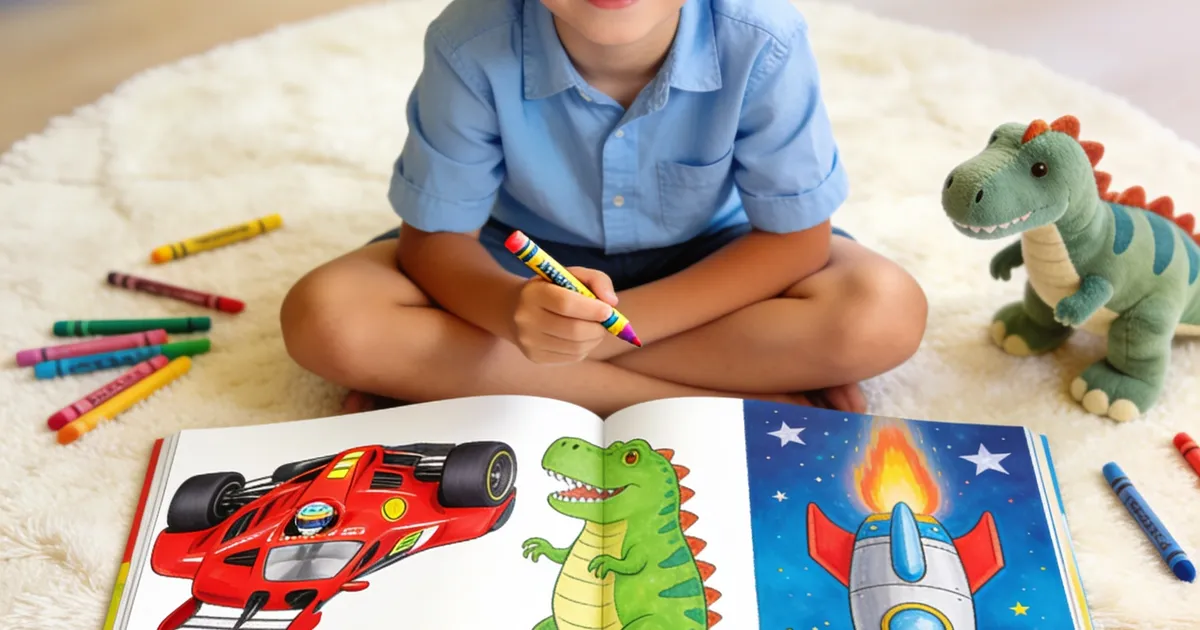

Coloring pages for boys work best when they match a child's specific interests — think dinosaurs, monster trucks, robots, and superheroes — not because of gender, but because kids engage longer with subjects they already love. A page featuring a Friendly Cartoon T-rex Playing with a Ball will hold attention far better than a generic floral design if your child is in a dinosaur phase. The key is offering variety and letting the child choose what excites them.
Many parents notice their sons gravitate toward action-oriented themes with bold lines and recognizable characters. This isn't about reinforcing stereotypes. It's about meeting kids where their enthusiasm already lives. When a six-year-old spends 25 minutes coloring a rocket ship, he's building the same fine motor skills as he would with any other page — he's just more likely to come back for another.
What Makes a Coloring Page More Appealing to Boys?
The most engaging coloring pages for boys share a few common traits: strong outlines, recognizable subjects, and room for imaginative storytelling. A page with a clear focal point — like a Monster Truck Jumping Over a Ramp — gives kids a starting point. They don't have to figure out what to color first.
Thick, bold outlines matter more than most people realize. The cartoon style on koloring.ai uses 2pt outlines specifically designed for bucket-fill coloring, which helps younger children stay inside the lines with less frustration. This small design choice makes a big difference for kids who are still developing pencil control.
Action and humor also pull kids in. A Cartoon Shark Wearing Sunglasses or a Friendly Robot Waving Hello adds personality that sparks conversation while coloring. Ask your child what the robot is saying or where the shark is going. This turns a solo activity into a shared one — and that's where the real developmental benefits kick in, according to Scholastic, which notes that coloring together builds vocabulary and storytelling skills alongside fine motor development.
Try this: Print the same page twice — once for you, once for your child. Color side by side without giving directions. Kids often mimic adult grip and stroke patterns naturally, improving their own technique without a single correction.
What Are the Best Themes for Boys' Coloring Pages?
The best themes match what your child already talks about, builds with, or watches. If LEGO dominates your living room floor, start with construction vehicles and robots. If every stick becomes a sword, try castles and dragons.
The five categories that consistently hold attention for boys ages 3-10 are dinosaurs, vehicles, superheroes, space, and monsters. Each offers something different developmentally:
- Dinosaurs like the Cartoon Dinosaur Family Walking Together let kids experiment with color freely — nobody knows what color a Triceratops really was, so there's no wrong choice.
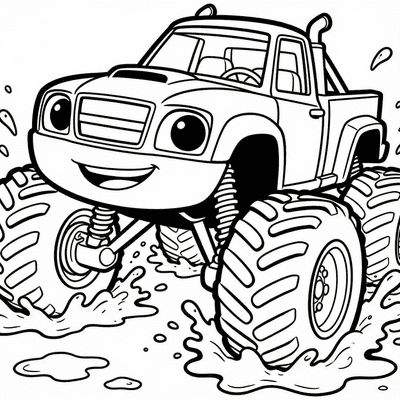
- Vehicles including Monster Truck Splashing Through Mud and Race Car Speeding on a Track appeal to kids who love motion and mechanics.
- Superheroes like the Superhero Flying Over a City Skyline encourage narrative play — your child might color and then act out the scene.
- Space pages such as the Astronaut Floating Among the Stars introduce science concepts naturally during coloring time.
- Monsters and robots like Giant Robot Standing Heroic in a City give permission for wild, creative color choices.
The free printable coloring pages for kids collection spans all these themes and more, so you can sample different categories without committing to a single interest. One week it's sharks; the next it's dragons. Following the child's lead keeps coloring feeling like play, not practice.
Try this: Rotate themes seasonally. Pull out Halloween coloring pages in October, winter scenes in December, and spring flowers in April. Novelty keeps the activity fresh without buying anything new.
How to Choose the Right Difficulty Level for Your Boy
Picking the wrong difficulty level is the fastest way to make a child abandon a coloring page. A page that's too hard causes frustration. One that's too easy gets boring. Matching the complexity to your child's age and mood makes all the difference.
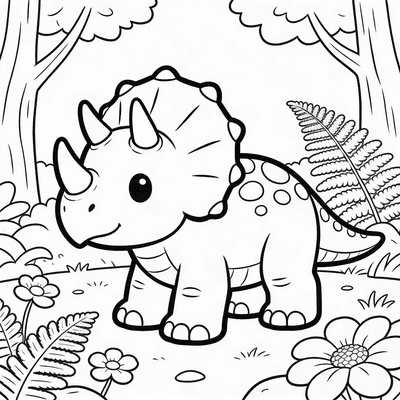
For ages 3-5, stick with pages marked "easy" that feature large, simple shapes. The Baby Triceratops in a Prehistoric Garden has wide open spaces perfect for crayons and developing grip. At this stage, scribbling outside the lines is completely normal — the goal is exposure, not precision.
Ages 6-9 are ready for "medium" difficulty with more detail. The Dragon Flying Over a Medieval Castle includes smaller sections that challenge fine motor control without overwhelming. This is the sweet spot where kids start taking pride in staying inside the lines.
For ages 10 and up, "hard" pages with intricate patterns work well. The Lion Roaring on a Rock or Geometric Mandala with Intricate Star Design offer complexity that older kids and even adults enjoy. At this level, coloring becomes a focus tool — something to do while listening to an audiobook or winding down before bed.
The best coloring pages for toddlers ages 2-4 go even simpler, with single-object pages that have extra-thick outlines. If you're starting with a two-year-old, begin there before moving up to the easy-level pages.
Free printable coloring pages and creative ideas, straight to your inbox.
No spam. Unsubscribe anytime.
Try this: Let your child pick any page regardless of difficulty, but have a backup ready at the right level. If they choose a complex adult-level mandala and get frustrated after three minutes, quietly swap in the easier option. The goal is a positive experience, not completing the page.
What Are the Developmental Benefits of Coloring for Boys Specifically?
Coloring builds the same foundational skills in all children, but boys sometimes benefit from the structured, seated nature of the activity in ways that deserve attention. Many boys gravitate toward gross motor play — running, jumping, building — and get less natural practice with the fine motor tasks that underpin handwriting.
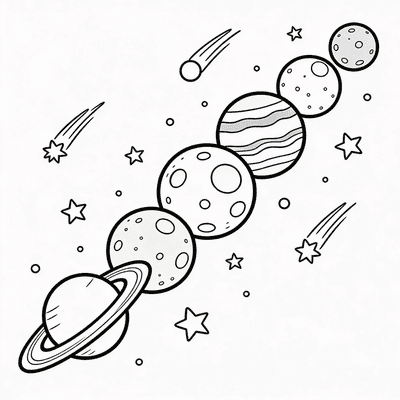
A page like the Alphabet with Animals (A-Apple, B-Bear Style) sneaks letter recognition into a coloring activity. The Solar System with All Planets in a Row introduces science vocabulary while your child decides whether Mars should be red or purple. This dual-purpose approach — coloring plus learning — works especially well for kids who resist traditional worksheets.
The PBS Parents activity finder highlights how character-based coloring pages from familiar shows can extend engagement with educational content beyond screen time. A child who watches a space-themed show might then spend 30 minutes coloring an Astronaut Floating in Space with Planets, reinforcing what they learned.
Coloring also provides a rare quiet pause in active days. For high-energy kids, sitting with a Castle with a Drawbridge and Moat for 15 minutes builds the self-regulation muscles that support classroom readiness. It's not about forcing stillness — it's about offering an appealing reason to practice it.
Try this: Use coloring as a transition activity. Ten minutes of coloring right after school or camp gives active kids a reset before homework or dinner. Keep a small stack of printed pages near the kitchen table so it's easy to start without setup.
How to Move Beyond Just Printing Pages
Once a child has colored a dozen pages, the novelty can fade. Adding variety to how you use the same coloring pages for boys keeps the activity engaging month after month.
The AI coloring page creator lets you generate custom pages based on whatever your child is currently obsessed with — whether that's a specific video game character, a favorite animal, or an imaginary creature they described at breakfast. Type in "tiger with wings wearing a pilot helmet" and you'll get a unique page nobody else has.
For a bigger project, the create a coloring book feature compiles multiple custom pages into a bound collection. This works beautifully for birthday gifts — a personalized book starring your child's favorite themes and characters. The coloring book shop also offers pre-made themed books if you prefer a ready-to-go option.
If your child loves drawing their own creations, the turn your kid's drawing into a coloring page tool converts their artwork into a clean outline they can color again and again. Kids get a thrill from seeing their own drawings transformed into "official" coloring pages. It also makes a meaningful grandparent gift — a coloring book of your child's original art.
For screen-free tracing practice, the Camera Trace & Sketch feature projects any coloring page onto paper so kids can trace before they color. This bridges the gap between digital and physical in a way that still keeps hands on real paper. You can learn more about the setup in this guide to using Camera Trace & Sketch to trace coloring pages on paper.
Try this: Create a monthly "coloring challenge" with your child. Pick a theme — dragons in January, ocean animals in June — and print or create one new page each week. Display finished pages on a dedicated wall or string them on a clothesline. The coloring challenges page offers structured prompts if you need ideas.
Frequently Asked Questions
Are coloring pages for boys different from coloring pages for girls?
No — any child can enjoy any coloring page regardless of theme. The distinction exists because search trends show parents often look for pages matching their child's specific interests, and boys statistically gravitate toward vehicles, dinosaurs, and superhero themes in early childhood. A girl who loves monster trucks will enjoy the same Monster Truck with Giant Flame Decals as any boy. Follow your child's interests, not the category label.
What age can boys start using coloring pages?
Most children can start with simple coloring pages around age 2, using pages with very large shapes and thick outlines. The Alphabet with Animals easy-level pages work well for this age group. Start with chunky crayons rather than markers or colored pencils — they're easier for small hands to grip. Expect scribbling well outside the lines; that's developmentally appropriate and still builds hand strength.
How do I get a boy who hates coloring to try it?
Connect coloring to an existing interest. If he loves building, print a Robot Chef Cooking in a Kitchen and talk about what the robot is making. If he's all about screens, use the color online tool as a bridge — it feels like a digital game but builds the same skills. Keep sessions short (5-10 minutes) and never force completion. Some kids warm up to coloring slowly, and that's fine. The Nickelodeon Parents coloring hub also offers recognizable characters that can pull in reluctant colorers through familiar faces.
Browse all 372+ free coloring pages and let your child pick whatever catches their eye — no signup, no limits, just print and go.
Free printable coloring pages and creative ideas, straight to your inbox.
No spam. Unsubscribe anytime.