The Complete Guide to Coloring Pages for Children (2026)
Everything parents need to know about coloring pages for kids: how to choose the right complexity by age, tips to keep sessions engaging, and how to create custom pages your child will actually want to color.
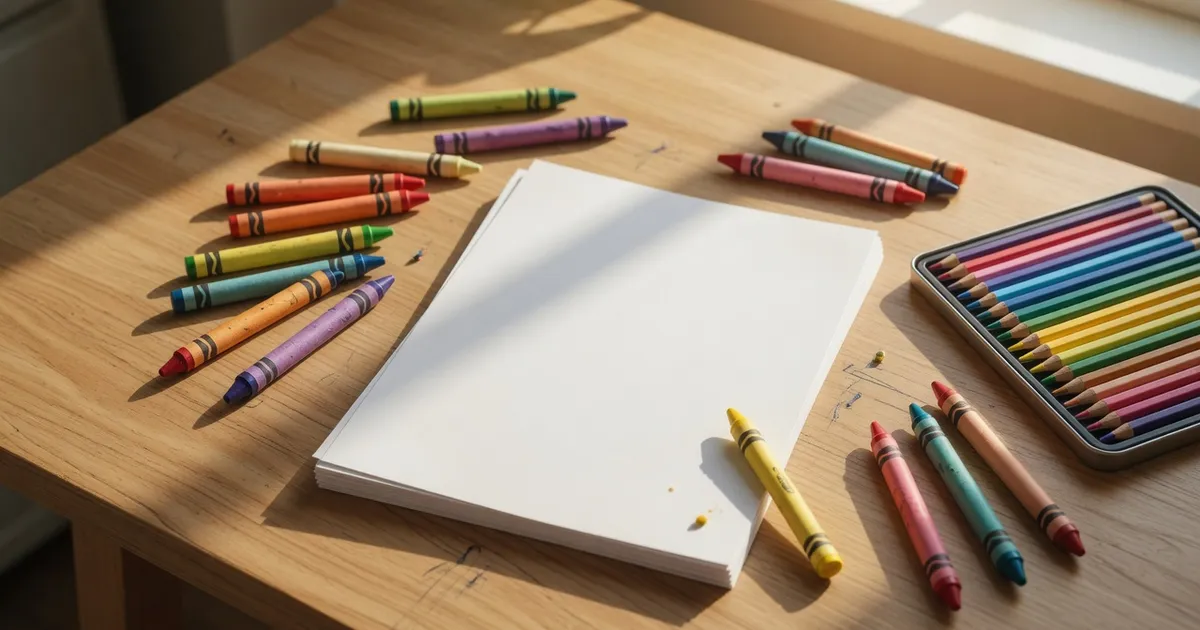

Your kid just handed you a coloring page they worked on for 45 minutes, every inch covered in purple grass, orange skies, and a sun wearing sunglasses. It's chaotic. It's perfect. And it turns out, that messy masterpiece was doing more for their brain than most "educational" activities ever could.
Coloring isn't just screen-free time. Research from the American Academy of Pediatrics shows that unstructured creative play, including drawing and coloring, supports emotional regulation, fine motor development, and early problem-solving skills. The tricky part isn't convincing kids to color. It's knowing how to choose the right pages, at the right complexity, for the right age, and making the whole experience feel like an adventure instead of homework.
This guide covers everything: developmental benefits by age, how to pick the right coloring pages, tips for making sessions actually stick, and how tools like the AI coloring page creator at Koloring.ai are changing what's possible when your kid says, "I want to color a dinosaur flying a rocket ship."
Why Coloring Is One of the Best Things You Can Give Your Child
It's easy to underestimate coloring. You hand over a sheet and some crayons, and suddenly you have 20 minutes of quiet. But what's actually happening during that quiet is remarkable.
The Developmental Science Behind Coloring
When a child grips a crayon and stays inside (or deliberately outside) the lines, they're building hand-eye coordination and fine motor control, the same muscles and neural pathways they'll later use for writing, typing, and tying shoes. A 2019 early childhood study highlighted by Zero to Three found that children who engage in regular drawing and coloring activities show measurably stronger pencil grip and letter formation by age five.
Beyond the physical, coloring is one of the few activities where children practice decision-making in a low-stakes environment. Should the dragon be red or green? Should the sky have clouds? Every tiny choice builds cognitive confidence.
The emotional benefits are just as real. Children use color to process emotions they can't yet verbalize. That purple sky isn't wrong, it might be exactly what your child needed to express that afternoon.
Unexpected tip: Research suggests that choosing their own coloring page, rather than being handed one, significantly increases how long children stay engaged. Letting them pick from a library like browse all coloring pages turns passive coloring into an act of ownership.
Coloring vs. Screens, A Realistic Take
This isn't an anti-screen article. But it's worth understanding the difference in what each activity demands. Screens are largely reactive, your child responds to what's happening. Coloring is generative, your child is the one creating something from nothing.
That shift from consumer to creator matters more as kids get older. And when they see a finished, colored page they made themselves, the pride is different. It's tangible. They can hold it, hang it, give it to grandma.
The community gallery at Koloring.ai is full of pages kids have colored and shared, and watching a child scroll through submitted artwork, then want to color something "just as good," is one of the most powerful motivation hacks a parent can use.
How to Choose the Right Coloring Pages for Your Child's Age
Not all coloring pages are created equal. A page with intricate mandala patterns is meditative for a 10-year-old and frustrating for a 4-year-old. Getting the complexity right is the difference between a coloring session that lasts 30 minutes and one that ends in a crumpled page.
Ages 2–4: Big, Bold, and Forgiving
At this age, the goal is joy, not precision. Children are learning that they can make marks on paper and those marks mean something. They don't need realistic proportions or fine detail, they need thick outlines and simple shapes with generous coloring areas.
Good choices at this age:
- Single animals with minimal background detail, a lone puppy, a sleeping kitten
- Chunky fruit and food shapes
- Simple faces with large features
- Pages with one main subject and lots of open space
The Cute Sleeping Kitten page at Koloring.ai is a perfect example, a gentle, rounded shape with thick lines that even a toddler's crayon can navigate.
Unexpected tip: At this age, print on cardstock instead of regular paper. It won't curl when wet, it won't tear when they press hard, and it makes the finished piece feel more "official", which they absolutely notice.
Ages 5–7: Characters, Stories, and Themes
This is the golden age of coloring. Kids have the motor control to color more carefully if they choose to, but they're also deeply invested in characters, animals, and fantasy worlds. Their coloring page is often a story they're telling themselves.
Great themes for this age:
- dinosaur coloring pages, especially scenes with action or narrative
- unicorn coloring pages and princess coloring pages for imaginative play
- dragon coloring pages for kids who love mythical creatures
- Animals doing human things, a dog reading a book, a cat cooking dinner
- car coloring pages and robot coloring pages for kids obsessed with machines
The Baby Dragon Hatching from an Egg page works beautifully here, enough detail to feel exciting, clean enough lines to not overwhelm.
Unexpected tip: Ask your child to name their coloring subject before they start. "What's this dragon's name? Where does he live?" This turns coloring into storytelling and dramatically extends engagement time.
Ages 8–12: Complexity, Detail, and Personalization
Older kids are ready for real challenge. They want pages that feel impressive when finished, detailed scenes, intricate patterns, realistic animals. They're also at the age where personalization matters enormously. A coloring page of their favorite animal, doing their favorite thing, is infinitely more motivating than a generic sheet.
This is where the AI coloring page creator becomes genuinely exciting. More on that in the next section.
Good page types for this age:
- mandala coloring pages, deeply satisfying, meditative, and beautiful when finished
- kawaii coloring pages for kids into that visual style
- horse coloring pages and butterfly coloring pages with anatomical detail
- space coloring pages with complex backgrounds and multiple elements
- castle coloring pages and mermaid coloring pages for detailed scene work
The Monarch Butterfly with Detailed Wings and the Beautiful Rose with Detailed Petals are exactly the kind of pages older kids will spend an hour on, and feel genuinely proud of.
Unexpected tip: For 10–12 year olds, introduce color theory before they start. Explain warm vs. cool colors, or show them what complementary colors look like. Even a 3-minute conversation transforms how they approach the page, suddenly they're not just coloring, they're designing.
How to Create Custom Coloring Pages Your Child Will Actually Want to Color
Here's the problem with most coloring page collections: they're generic. Your child is obsessed with a very specific kind of dragon, the small, round, baby kind that lives in a cozy cave. That page doesn't exist in any printable book.
Or it didn't. Now it can, in about 30 seconds.
The Koloring.ai AI Coloring Page Creator
The AI coloring page creator at Koloring.ai lets you generate completely original coloring pages from a text description. Your child types (or dictates) something like "a dragon reading a book inside a cozy cave", and the AI produces a ready-to-color page in seconds.
Here's how the tool works:
Free printable coloring pages and creative ideas, straight to your inbox.
No spam. Unsubscribe anytime.
- Type any description, be as specific or silly as you want
- Choose a style: Cartoon, Realistic, Kawaii, Mandala, or Stencil
- Pick complexity: Simple (great for young kids), Medium, or Detailed
- The AI generates a unique, print-ready coloring page instantly
You get 2 free text creations to start, no account required. If your family colors regularly, the Pro plan at $5.99/month gives you unlimited generations, which pays for itself the first week.
Turning Photos into Coloring Pages
This might be the feature parents get most excited about. You can upload a photo and turn it into a coloring page, your dog, your child's drawing, a family vacation photo, a pet hamster.
The AI converts it into clean coloring page outlines that retain the character of the original photo. You get 1 free photo conversion to try it. The results are genuinely impressive, and handing your kid a coloring page of their own pet creates a level of excitement that no store-bought coloring book can match.
Building a Custom Coloring Book
Once you've created a collection of pages, or picked favorites from Koloring.ai's library, the coloring book creator lets you bundle them into a PDF booklet. You pick the pages, arrange the order, and download a print-ready file.
This is incredible for:
- Birthday party favors (a coloring book themed around the birthday kid's interests)
- Road trips (a custom book built around what your child loves right now)
- Rainy day activity boxes
- Personalized gifts from grandparents
Camera Trace & Sketch: Trace on Real Paper
For kids who want to color on their own, the Camera Trace & Sketch feature is something different. It projects an AI-generated coloring page onto real paper using your phone or tablet camera, your child traces the image directly onto the page, then colors their hand-traced creation.
The combination of digital and physical is surprisingly powerful for building drawing confidence. Kids who "can't draw" suddenly can, and that shift in self-perception matters.
Unexpected tip: Generate a coloring page using your child's description, not yours. Ask them: "What should the AI make?" and let them dictate. Even kids who aren't excited about coloring get genuinely invested when the page was their idea.
Practical Tips for Making Coloring Sessions Work (From Setup to Cleanup)
The best coloring page in the world won't help if the session falls apart before the first crayon touches paper. These are the things that actually make a difference.
Setting Up the Right Environment
Lighting matters more than most people realize. Natural light or a good overhead light prevents eye strain and makes colors appear accurate, which matters when your child is trying to make their dragon look exactly the right shade of emerald green.
A dedicated coloring corner, even just a specific spot at the kitchen table with a small bin of supplies, signals to your child's brain that this is a coloring place. The ritual of going to that spot helps them settle faster.
Keep supplies sorted by type, not thrown together in a box. When a child has to dig through a tangled mess for the right marker, they give up and leave. When crayons are in one spot and markers in another, they stay engaged and stay creative.
Choosing the Right Tools for the Right Page
Not every tool works on every page:
- Thick crayons, best for toddlers and simple outline pages
- Colored pencils, ideal for detailed pages like mandalas or realistic animals; allow shading and blending
- Washable markers, great for bold, vibrant fills on simple pages; bleed on thin paper
- Gel pens, perfect for older kids adding fine details and highlights
For pages you print at home, 24 lb paper or heavier makes a real difference. Standard 20 lb copy paper wrinkles with markers and tears under heavy pencil pressure.
Keeping the Motivation Alive
The NAEYC (National Association for the Education of Young Children) consistently highlights that child-directed creative activities produce deeper engagement and longer attention than adult-directed ones. In practice, that means: give your child real choice.
Let them pick their page. Let them choose their colors. Resist the urge to correct a purple dog or a green sun. The "mistakes" are the point, they're the evidence of a child making independent decisions.
Display finished work. Put it on the fridge, frame a particularly beautiful page, send it to a grandparent. When children see that their finished coloring matters to the people they love, they put more into the next one.
Unexpected tip: Try a "coloring playlist." Ask your child to pick 4–5 songs they love, and only play that playlist during coloring time. Over a few weeks, the music becomes a conditioned trigger for creative focus, they hear the playlist and their brain shifts into coloring mode.
Seasonal and Themed Pages for Engagement Spikes
Interest spikes naturally around seasons and holidays, use that. Halloween coloring pages in October, Christmas coloring pages in December, flower coloring pages and bird coloring pages in spring.
Tying coloring to what's already exciting in your child's world, a movie they just saw, an animal they learned about at school, a holiday coming up, means you don't have to manufacture motivation. It's already there.
The ocean coloring pages collection works brilliantly after a beach trip or a visit to an aquarium. The heart coloring pages and star coloring pages are perfect around Valentine's Day or for kids going through an astronomy phase.
And for themes that don't exist in any collection? The AI creator handles those instantly, "a golden retriever puppy dressed as an astronaut," "a cupcake castle at night," whatever wild thing your child comes up with today.
Coloring Together: The Underrated Family Activity
Coloring doesn't have to be something kids do alone while adults do other things. Coloring together, even just 15 minutes, creates conversation that wouldn't happen otherwise.
Children often open up about their day, their worries, or their imagination when their hands are busy and there's no direct eye contact pressure. It's the same reason kids talk more easily during car rides. The side-by-side activity creates psychological safety for real talk.
Print two copies of the same page and color it differently. See who interprets it more creatively. Make it a game, not a lesson.
FAQ: What Parents Actually Ask About Coloring Pages
At what age should kids start coloring?
Children as young as 18 months can begin scribbling with chunky crayons, and that counts as coloring. You're not looking for staying inside the lines at this age, you're just building the habit of making marks on paper and associating it with positive feelings. True coloring with any intentionality typically starts around age 2.5 to 3. By 4, most kids have the coordination to attempt simple outline pages.
Is coloring actually educational, or is it just fun?
Both, and that's the best kind of activity. The Scholastic education research database consistently links coloring and drawing to early literacy skills, specifically letter recognition and writing readiness. Fine motor development from coloring directly translates to pencil control for writing. Beyond the physical, color recognition, decision-making, and creative expression are all legitimate educational outcomes. You don't have to choose between fun and educational here.
How do I get my child to try new themes beyond their favorites?
This is the "my kid will only color cats" problem, and it's real. The trick is bridging from the familiar rather than replacing it. If your child loves cat coloring pages, try introducing dog coloring pages as "a friend for the cat." Use the AI creator to generate a page with both, "a cat and a golden retriever playing together." The familiar anchor makes the new theme feel safe. Over time, the variety expands naturally without the resistance.
Every child deserves a coloring page they're genuinely excited to color, and now you have everything you need to make that happen, from choosing the right complexity for their age to building a completely custom page in seconds. Start exploring over 149 free pages and try the AI creator at koloring.ai/coloring-pages/.
Free printable coloring pages and creative ideas, straight to your inbox.
No spam. Unsubscribe anytime.