Large Print Coloring Pages for Seniors
By Koloring Editorial Team
Large print coloring pages use bold 2pt outlines, simplified shapes, and spacious open areas that make coloring accessible for young children, seniors with vision changes, and anyone who struggles with detailed designs. This guide covers what defines a genuinely large-print page, who benefits most
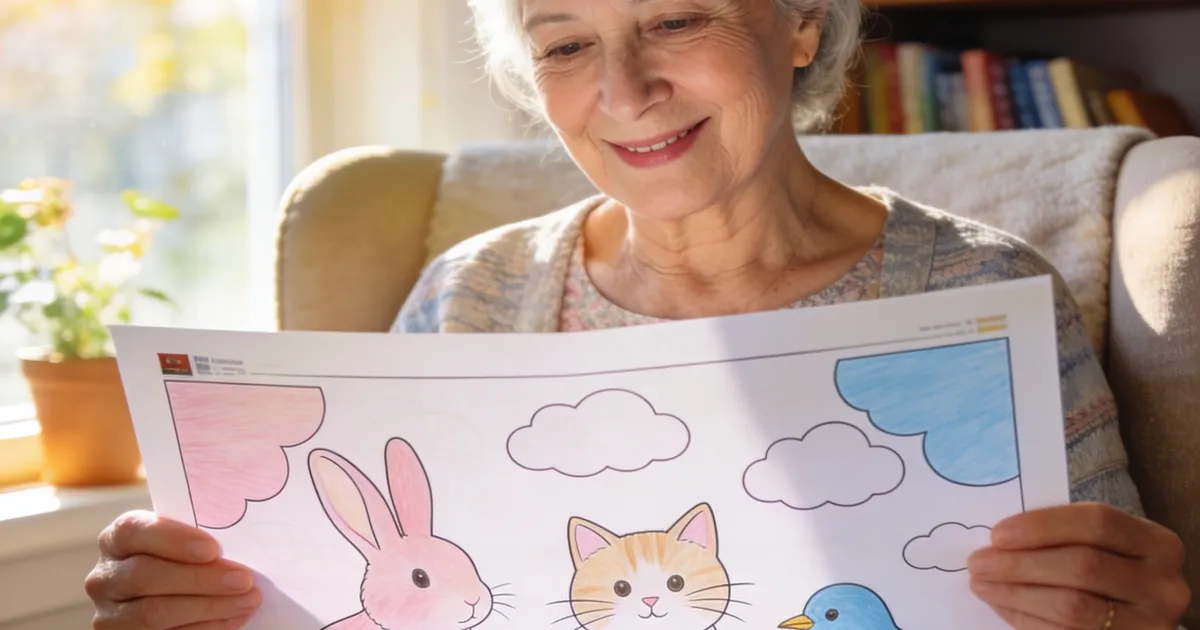

Large print coloring pages are coloring sheets with bold, simplified outlines and spacious open areas designed to be easier to see and fill in than standard detailed pages. The thicker lines and larger shapes reduce the precision needed to stay inside the lines. This makes them a practical choice for young children still building motor control, seniors with vision changes, or anyone who wants a relaxing coloring experience without squinting at tiny details.
At koloring.ai, many of our easy-rated pages use bold 2pt outlines that work perfectly for this purpose — the cartoon style pages are especially forgiving for bucket-fill coloring and chunky crayons. If you've ever watched a frustrated 3-year-old abandon a detailed fairy page because the wings were too fiddly, you already know why line weight and open space matter.
What Makes a Coloring Page "Large Print"?
A large print coloring page isn't just a regular page zoomed in. The design itself is built differently from the start.
The defining feature is bold outlines — typically 2 points or thicker — that create clear boundaries between sections. The shapes inside those outlines are simplified, with fewer intricate swirls, tiny scales, or detailed mandala-style patterns. Backgrounds are minimal or absent so the main subject fills the page without clutter. On our platform, pages rated "easy" with an age range of 3-5 almost always follow this formula: one clear subject, thick lines, plenty of open space for broad strokes.
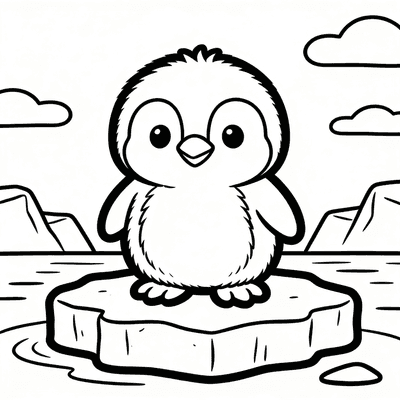
A second hallmark is high contrast in the line art itself. The black outlines against a white background create a visual clarity that helps developing eyes (or aging eyes) distinguish where one section ends and another begins. You can browse our easy coloring pages to see this principle in action — the Baby Penguin Standing on an Ice Block page is a perfect example, with its single subject, thick outlines, and uncluttered composition.
Tip most guides miss: Place a colored sheet of construction paper behind the printed page. The subtle color bleed-through helps kids with visual processing differences distinguish the white coloring area from the black outline more easily — a trick occupational therapists use that works surprisingly well at the kitchen table.
Who Benefits Most from Large Print Coloring Pages?
Young children are the most obvious audience, but the need for bold, simple designs extends well beyond the preschool crowd.
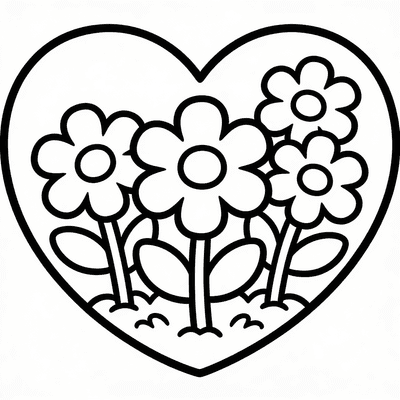
Toddlers and preschoolers (ages 2-4) benefit because their fine motor control is still developing. A thick crayon gripped in a small fist simply cannot navigate a 1pt hairline outline. Pages like the Big Heart with Flowers Growing Inside give them wide sections they can successfully fill, which builds the confidence to keep coloring. The Alphabet with Animals (A-Apple, B-Bear Style) page combines bold letter forms with simple animal shapes, doubling as an early literacy activity.
Adults with low vision or hand tremors are an often-overlooked group. According to Scholastic, coloring supports focus and fine motor engagement at any age, but standard adult coloring books with intricate mandalas can be frustrating for someone dealing with vision changes or essential tremor. A large print design with generous coloring zones removes that barrier while still providing the calming, meditative benefits of coloring.
Stroke survivors and people in occupational therapy frequently use bold-line coloring as part of hand-eye coordination recovery. The simplified forms let the person focus on the motor movement rather than the visual complexity. Many parents find that grandparents who dismissed "coloring books" happily sit and color with grandkids when the pages don't feel infantilizing — a nature-inspired page like the Simple Daisy with a Smiling Face bridges that gap nicely.
How to Choose the Best Large Print Coloring Pages
Not every page labeled "easy" is genuinely large print, and not every large print page works for every person. A few quick checks before you hit print will save frustration.
Check the line weight first. On koloring.ai, pages in the cartoon style default to bold outlines that are roughly 2pt — thick enough to see clearly and forgiving to color within. If you're using the AI coloring page creator, you can specify "thick bold outlines, simple shapes, no small details" in your prompt to get large-print-friendly results every time.
Free printable coloring pages and creative ideas, straight to your inbox.
No spam. Unsubscribe anytime.
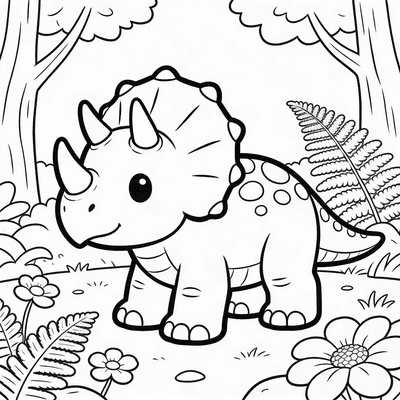
Match the subject to the person's interests, not their ability level. A 4-year-old who loves dinosaurs doesn't need a hyper-realistic Triceratops with scales and shadows. The Baby Triceratops in a Prehistoric Garden page keeps the subject recognizable but uses simplified, bold shapes that a child can actually complete. An adult who loves flowers will engage far more with a Big Sunflower with a Ladybug on a Leaf than with a generic geometric pattern.
Check the age rating on the page. Our easy-rated pages (ages 3-5) are the sweet spot for large print coloring. Medium pages (ages 6-9) often include more detail and thinner lines. You can filter by difficulty when you browse coloring pages to see only what works for your needs.
Tip most guides miss: Print two copies of the same page. Sit beside the person and color your own copy rather than "helping" on theirs. This parallel coloring approach — used in Montessori classrooms — models technique without taking over, and it works beautifully with large print pages because the bold outlines make it easy for the other person to see what you're doing from a slight distance.
Using Large Print Pages Beyond Crayons
The bold, open designs of large print coloring pages make them surprisingly versatile for activities that go beyond standard coloring.
Paint-with-water books work brilliantly with large print pages. Print the sheet on slightly heavier paper (cardstock around 80lb works well), hand the child a brush and a cup of water with a drop of food coloring, and let them "paint" the wide sections. The thick outlines contain the water better than thin lines would, and there's zero mess from actual paint. The Cute Baby Unicorn Sitting on a Cloud page is ideal for this — big open sky and cloud sections that reward broad brush strokes.
Tissue paper collage is another favorite. Cut small squares of colored tissue paper, put a thin layer of glue inside each section, and press the tissue down. The bold outlines act as natural borders between color zones, and the large sections mean a 3-year-old can place the tissue squares without needing surgical precision.
Dot marker compatibility is a big practical advantage. Dot markers (those chunky paint-filled daubers) have wide tips that completely cover thin lines, making standard coloring pages a muddy mess. Large print pages with their generous spacing and thick outlines handle dot markers perfectly — each dot lands cleanly inside its section. PBS Parents' coloring and printable resources often highlight this kind of multi-use approach for early learners.
For kids who resist coloring because "it's boring," switching the medium often changes everything. The same Cute Baby Penguin Sliding on Ice page that got a shrug with crayons might get 20 minutes of focused attention with dot markers and googly eyes glued on afterward.
Frequently Asked Questions
Can adults use large print coloring pages?
Yes — large print coloring pages work well for adults with vision impairments, hand tremors, arthritis, or anyone who finds detailed adult coloring books frustrating. The bold outlines and simplified shapes provide the same stress-relieving benefits of coloring without the eye strain or fine-motor demands. Many adults use them alongside children as a shared activity, and nature-themed pages like flowers or simple landscapes avoid feeling childish while remaining accessible.
What paper works best for large print coloring sheets?
Standard 20lb printer paper works fine for crayons and colored pencils, but if you're using markers, paint, or dot markers, switch to at least 24lb paper or light cardstock (65-80lb) to prevent bleed-through. For paint-with-water activities, cardstock is essential — thinner paper will buckle and tear. If the page will be displayed, a slightly textured paper gives crayon and colored pencil work a more finished look.
Are large print pages only for beginners?
Not at all. While they're excellent for beginners, large print pages also serve experienced colorists who want a faster, more relaxing session without committing to a detailed mandala that might take hours. The open spaces invite creative techniques like shading, blending, and pattern-filling that can be just as sophisticated as intricate line work — it's a different kind of challenge rather than an easier one.
Ready to print something that actually works for small hands or tired eyes? Browse all 150+ free printable coloring pages and use the difficulty filter to find bold, large-print-friendly designs — no signup, no email, just click and print.
Free printable coloring pages and creative ideas, straight to your inbox.
No spam. Unsubscribe anytime.