10 Screen-Free Activities for Kids (Including Coloring)
Tired of the screen time battle? Here are 10 activities without screens that actually hold kids' attention — including one creative twist on coloring that changes the game.
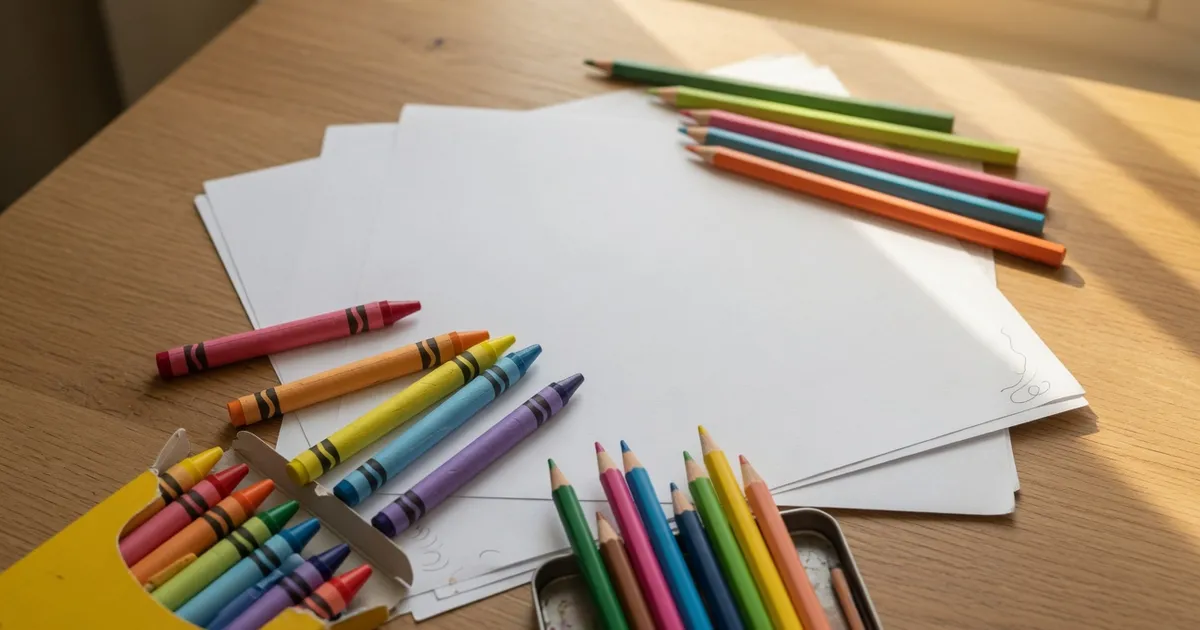

My daughter once had a 45-minute meltdown because I turned off the TV , then spent two hours happily drawing cats without me asking her to do anything. That gap between resistance and engagement is exactly where screen-free activities for kids live. The trick isn't taking something away. It's replacing it with something that actually competes.
Here are 10 activities that genuinely work, plus practical ways to make each one stick.
Why Screen-Free Time Actually Matters (Beyond the Obvious)
You already know screens aren't great in excess. But the reason screen-free time is worth protecting isn't just about limiting damage , it's about what grows in the absence of passive entertainment.
The American Academy of Pediatrics has consistently found that unstructured, creative play builds problem-solving skills, emotional regulation, and language development in ways that screen time simply can't replicate. These aren't abstract benefits. They show up in how your kid handles frustration, makes friends, and learns to focus.
Unexpected tip: The transition off screens is hardest in the first 10 minutes. Give your child a physical object to hold , a crayon, a block, a ball , the moment you turn the device off. It short-circuits the "now what?" spiral before it starts.
10 Screen-Free Activities That Actually Hold Their Attention
1. Coloring (With a Creative Twist)
Coloring is the most underrated activity on this list , not because it's new, but because most parents don't realize how far it's evolved. Printing a cat coloring page or a dinosaur coloring page takes 30 seconds and costs nothing.
But here's where it gets genuinely exciting: Koloring.ai's AI coloring page creator lets your child describe exactly what they want to color. Type something like "a dragon reading a book," choose a style (Cartoon, Kawaii, Realistic, Mandala, or Stencil), pick the complexity level, and the AI generates a unique page in seconds. There are 2 free text creations and 1 free photo conversion to start , no commitment needed.
You can even turn any photo into a coloring page , a family photo, a pet, a drawing they already made. That personal connection makes kids wildly more engaged than a random generic page.
Unexpected tip: Let your child narrate their coloring page like a story while they color. "The baby dragon is hatching from his egg because he smelled cupcakes." It doubles as language and imagination development simultaneously.
2. Building Blocks and LEGO Free Play
Unstructured building time , no instructions, no goal , is where real spatial reasoning develops. Put out a bin of mixed pieces and walk away.
According to Zero to Three, open-ended construction play is one of the strongest predictors of early math and science readiness. Your kid building a "rocket dog house" is doing geometry, engineering, and storytelling at the same time.
Unexpected tip: Introduce a single weird constraint: "Build something that an elephant could hide behind." Constraints spark more creativity than total freedom.
3. Sensory Bins
Fill a bin with dried rice, pasta, kinetic sand, or water beads. Add cups, spoons, small figurines. Done.
Sensory play is especially effective for toddlers and kids who struggle with transitions, as it's self-regulating by nature. You don't have to teach anything , just set it up and let them dig.
Unexpected tip: Add a few drops of food coloring to rice the night before and let it dry. The color surprise the next morning gets them excited before they even start playing.
4. Nature Scavenger Hunt
Write or draw a list of 8–10 things to find outside: a smooth rock, something yellow, something that makes a sound. Send them out with a bag.
This works in backyards, parks, or even walks around the block. The NAEYC's research on outdoor play consistently shows that time in natural environments reduces anxiety and improves attention spans , including the kind needed to sit and focus on a coloring page later.
Unexpected tip: End the hunt by letting them draw what they found. Pair it with a bird coloring page or flower coloring page to connect the outdoor experience to a creative one.
5. Playdough or Air-Dry Clay
Rolling, squishing, and sculpting is deeply satisfying for kids at almost every age. Make homemade playdough together (flour, salt, water, oil, food coloring) and the activity starts before the actual playing does.
Free printable coloring pages and creative ideas, straight to your inbox.
No spam. Unsubscribe anytime.
Unexpected tip: Give them a theme from something they love , if they're obsessed with unicorns, challenge them to sculpt one. Cross-pollinating interests keeps engagement high.
6. Dress-Up and Imaginative Play
A bin of old clothes, scarves, hats, and shoes is one of the best investments you can make. Imaginative role play is where kids process emotions, practice empathy, and rehearse social scenarios they're still figuring out.
Unexpected tip: Occasionally join in and play the silliest possible character. When kids see you be ridiculous, their play gets richer and bolder.
7. Puzzles
Match the puzzle complexity to your child's age , slightly challenging, not frustrating. Puzzles build working memory, persistence, and spatial skills. They're also one of the few activities where kids will genuinely ask to "do it again."
Unexpected tip: After finishing a puzzle, have your child draw their own version of the scene. Pair a space puzzle with a space coloring page or an ocean one with an ocean coloring page.
8. Cooking and Baking Together
Measuring, pouring, mixing, and decorating are all hands-on skills wrapped in something delicious. Even a 3-year-old can wash vegetables or pour pre-measured ingredients.
Unexpected tip: Let them decorate their finished creation and then color a cupcake coloring page after , the real-life connection makes the coloring feel meaningful, not random.
9. Journaling or Drawing Books
Give kids a blank notebook that's entirely theirs. No prompts, no grades, no corrections. Drawing their day, their dreams, or made-up characters builds both fine motor skills and emotional literacy.
Unexpected tip: Use Koloring.ai's coloring book creator to print a custom PDF booklet of your child's favorite AI-generated pages. It becomes their personal activity book , something they helped design.
10. Camera Trace & Sketch (Tracing on Real Paper)
This one genuinely surprises parents. Koloring.ai's Camera Trace & Sketch tool lets kids trace AI-generated images directly onto real paper using their device's camera as a guide , no artistic skill required to get started. The result is a drawing they made themselves, with their hands, on actual paper.
It bridges the digital and physical in a way that feels magical to kids and deliberate to parents. Pick a princess coloring page or a baby dragon hatching from an egg, trace it, then color it in. Start to finish, it's a genuinely screen-productive activity.
Frequently Asked Questions
How do I get my child to actually stay off screens?
The most effective strategy isn't restriction , it's replacement. Have the activity already set up before screens go off. A coloring page on the table, a puzzle halfway started, or a sensory bin already out removes the "now what?" moment that sends kids right back to a device.
What screen-free activities work for rainy days when we can't go outside?
Coloring, puzzles, playdough, and imaginative play are your best indoor options. For something fresh, try the AI coloring page creator , your child describes any scene they can imagine (a golden retriever puppy playing in the park, a baby pterodactyl learning to fly) and colors a one-of-a-kind page that didn't exist five minutes ago.
Are coloring pages actually educational or just a way to keep kids busy?
According to Scholastic's child development resources, coloring directly supports fine motor development, color recognition, focus, and early reading readiness (holding a crayon correctly is the foundation for holding a pencil). It's one of the few activities that's both genuinely calming and genuinely developmental at the same time.
The next time your kid reaches for a device, hand them a crayon and a page they helped create , browse all coloring pages at koloring.ai/coloring-pages/ or let them build something entirely their own at koloring.ai/create.
Free printable coloring pages and creative ideas, straight to your inbox.
No spam. Unsubscribe anytime.