Coloring Pages for Stress Relief and Anxiety
By Koloring Editorial Team
Coloring pages offer a science-backed way to lower stress in both kids and adults by engaging the brain in a focused, repetitive creative task. This guide covers which types of coloring pages work best for stress relief, how to build a simple daily routine, and why coloring outperforms screen time
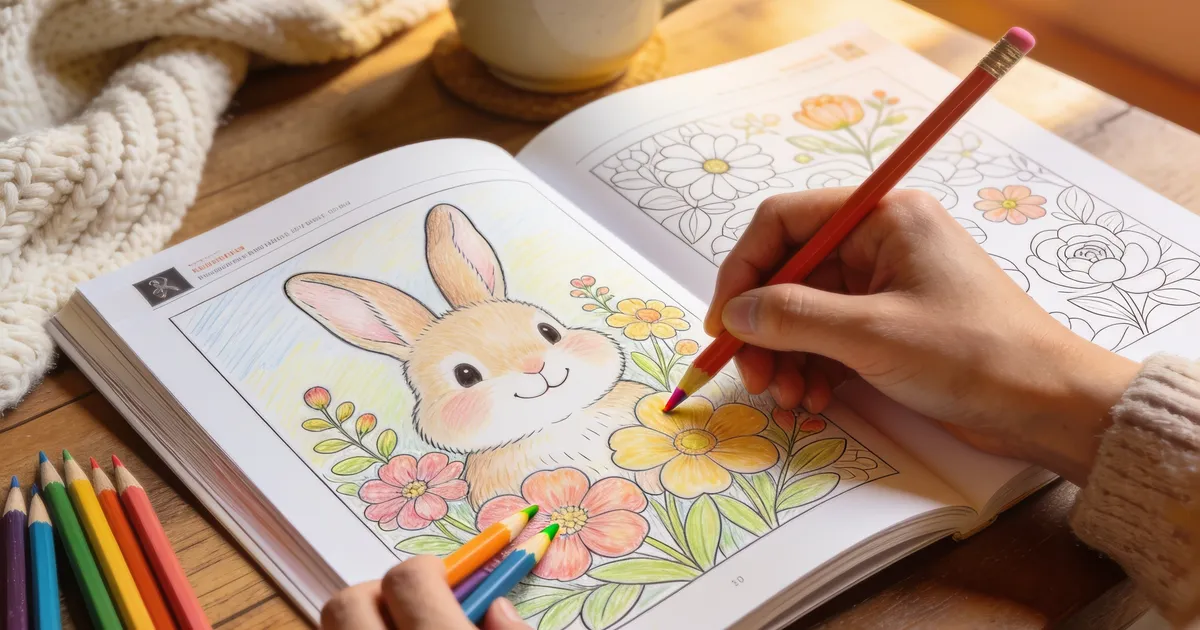

Coloring pages reduce stress and anxiety in both kids and adults by shifting the brain into a focused, low-stakes creative state. The repetitive motion of filling in shapes with color quiets the amygdala, the brain's fear center, and lets the prefrontal cortex — the part responsible for logic and calm — take over. For parents raising kids in a world of constant stimulation, this is a free, 10-minute reset button that actually works.
The physical act of choosing and applying color to a page creates what psychologists call "active focused attention." You're not zoning out — you're zoning in. And that distinction is what makes coloring pages stress relief different from passive screen time. Your child's racing thoughts slow down because their brain is too busy deciding between cerulean and sky blue to keep spinning on last week's playground drama.
How Does Coloring Lower Stress in Children?
Coloring engages the same neural pathways as meditation — it forces the brain to focus on one predictable, repetitive task, which naturally lowers cortisol levels. When a child sits down with a page, their breathing slows, their heart rate steadies, and the mental chatter of the day fades into the background.
Think of it as a brain break that doesn't feel like a break. A child who melts down after school isn't being difficult — their nervous system is overloaded. Handing them a cute cartoon pony with a braided mane and a handful of crayons gives their brain a concrete task that requires no performance pressure. There's no right answer. No grade. Just the feel of wax on paper and the slow emergence of something they made.
Many parents notice that coloring is the one activity where a normally restless child will sit still without being asked. That's not a coincidence — it's sensory regulation in action. The tactile feedback of crayon against paper, the visual satisfaction of a filling page, even the soft sound of coloring — these micro-sensory inputs work together to calm an overstimulated nervous system.
Unique tip: Try the "3-2-1 reset" — three deep breaths, two minutes of silent coloring, one sentence about how they feel afterward. It's a simple emotional regulation tool that works for ages 4 and up, and you can browse coloring pages together to find the right image for the moment.
What Types of Coloring Pages Work Best for Stress Relief?
The best stress-relief coloring pages have clear boundaries, recognizable subjects, and a moderate level of detail — not too sparse, not too intricate. Mandalas and repetitive patterns are famously effective for adults, but kids need something recognizable to anchor their attention.
For children ages 3-5, simple pages with thick outlines and large shapes work best. The Alphabet with Animals (A-Apple, B-Bear Style) page combines letter recognition with a calming art activity — learning and emotional regulation in one go. At this age, the goal isn't neatness. A toddler scribbling wildly across a bear-shaped outline is still getting the full stress-relief benefit because the motor engagement is what matters.
For ages 6-9, slightly more detailed pages hold attention longer. The Beautiful Monarch Butterfly with Detailed Wings offers enough structure to keep a first-grader engaged without overwhelming them. The symmetry of butterfly wings also creates a naturally soothing visual rhythm — coloring one side, then matching the other, feels satisfying in a way that calms the mind.
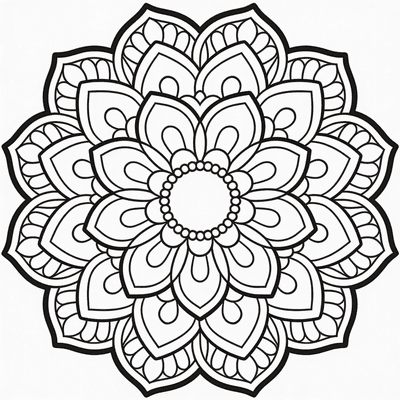
For adults, the Circular Mandala with Flower Petals Pattern and Geometric Mandala with Intricate Star Design are designed specifically for deep focus. A 2025 report from the American Art Therapy Association highlights that structured coloring activities measurably reduce anxiety in adults after just 20 minutes of engagement. The key is choosing a page that matches your current mental bandwidth — not your skill level. A tired parent doesn't need a hyper-detailed adult coloring page with 200 tiny petals. They need something like the Lotus Mandala with Detailed Symmetrical Design — intricate enough to absorb focus, but not so complex it feels like a chore.
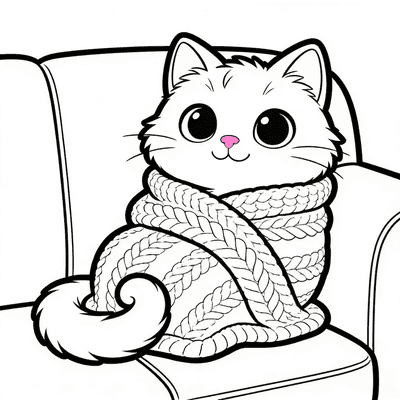
Unique tip: Keep a "break glass in case of emergency" folder. Print 3-5 pages in advance and stash them in a drawer. When you or your child hits a stress spike, the page is already there — no scrolling, no decision fatigue, no friction. The Luna napping in a sunbeam on a wooden floor page is perfect for this — it's cozy, calming, and loved by every kid who's tried it.
How Can You Build a Simple Stress-Relief Coloring Routine?
The families who get the most out of coloring pages stress relief aren't the ones who do it for hours. They're the ones who do it for 10 minutes, consistently, at predictable moments in the day.
Pick a trigger moment. Right after school. Before dinner while you're cooking. The 15 minutes between bath and bedtime. The trigger makes it automatic — you're not deciding to color, you're just doing what you always do at that time. One parent started keeping a stack of printed pages and a small pencil case of crayons in the kitchen drawer. Every day at 5:15 PM, while dinner was in the oven, her 6-year-old colored at the kitchen island. The pre-dinner meltdowns stopped within a week — not because the child changed, but because the routine gave her nervous system a predictable decompression window.
Free printable coloring pages and creative ideas, straight to your inbox.
No spam. Unsubscribe anytime.
The color online tool is useful for these short windows — no printing, no setup, just open and color. The bucket-fill feature lets kids complete a satisfying area in seconds, which is perfect for short attention spans or moments when you need calm fast.
For parents, the routine is just as important. Coloring alongside your child — not supervising, not commenting, just coloring your own page — is one of the purest forms of co-regulation. Your calm nervous system signals to theirs that the environment is safe. The Beautiful Rose with Detailed Petals or Bouquet of Wildflowers in a Vase work well for a parent's parallel coloring session — detailed enough to hold your attention, beautiful enough to feel like a small creative act rather than a parenting task.
Unique tip: Create a "quiet corner" — a small basket with printed pages, crayons, and a cushion in a low-traffic spot. The basket itself becomes a visual cue. When your child sees it, their brain starts priming for calm before they even pick up a crayon. Rotate the pages weekly so the novelty stays fresh.
Coloring Pages vs. Screen Time: What Actually Calms the Brain
Screens promise relaxation but deliver the opposite — rapid scene changes, algorithm-driven content, and blue light that suppresses melatonin. Coloring pages deliver what screens only pretend to offer: a single, self-paced activity with no notifications.
A child watching a tablet may look calm, but their brain is in a state of high alert — scanning for the next dopamine hit, processing 24 frames per second of changing imagery. A child coloring is in a state of sustained attention. The difference shows up in behavior within 20 minutes. The post-tablet child is irritable and demands more. The post-coloring child is grounded and easier to transition to the next activity.
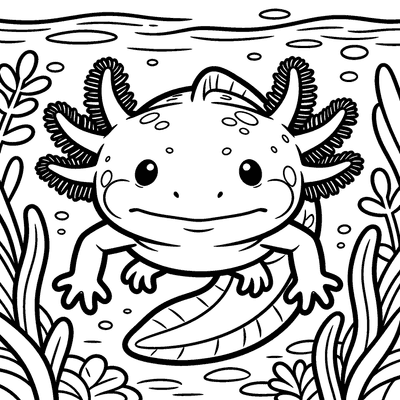
The 10 Screen-Free Activities for Kids (Including Coloring) post covers this in more depth, but the core insight is simple: coloring is active relaxation, screens are passive stimulation. The Axolotl Floating Among Water Plants page is a favorite swap for the after-dinner tablet window — the axolotl's gentle smile and flowing water plants create a naturally soothing scene.
For older kids who resist the idea of coloring, try the AI coloring page creator. Kids can type in whatever they're into — "a samurai cat surfing on a pizza" — and get a custom page that feels like theirs. The personalization removes the "this is for babies" objection and gets them into the same focused flow state.
Unique tip: The "color-first" rule. Before any screen time, your child colors one page or fills one section of a larger page. This isn't a punishment — it's a brain transition. The coloring primes the prefrontal cortex for self-regulation, which means the screen time that follows will be easier to end when the timer goes off.
Frequently Asked Questions
Can coloring really help with adult stress, or is it just for kids?
Coloring is a legitimate stress-management tool for adults, backed by research from the American Art Therapy Association showing that structured coloring reduces anxiety markers after 20 minutes of engagement. The Mandala with Peacock Feather Pattern and Nature-inspired Mandala with Leaves and Vines are designed specifically for adult focus — the repetitive patterns engage the same neural pathways as meditation without requiring any artistic skill. Many parents color alongside their kids as a co-regulation practice, and it's just as effective as a solo stress-relief tool.
What supplies do I need for stress-relief coloring at home?
You need surprisingly little — a few printed pages and a set of crayons or colored pencils is enough to get started. Crayons work well for younger kids because the waxy resistance provides sensory input, while colored pencils give adults more precision for detailed mandala work. The Best Crayons, Markers & Colored Pencils for Kids (2026) guide covers specific recommendations, but the most important rule is to avoid anything that creates pressure — washable markers are forgiving, and triangle-shaped crayons don't roll off the table. A small pencil case that lives in a consistent spot removes the setup friction that kills the habit before it starts.
How do I get a child who hates coloring to try it for stress relief?
The most common reason kids resist coloring is that they associate it with staying inside the lines and "doing it right." Remove that pressure entirely. Try the turn your kid's drawing into a coloring page feature — when a child sees their own artwork turned into a coloring page, the ownership flips the dynamic from "assignment" to "fun." Another approach is to color alongside them without commenting on their page at all. When a child sees a parent genuinely enjoying something, the curiosity often overrides the resistance. Start with cartoon-style pages that match their existing interests rather than generic flowers or patterns.
Ready to turn coloring pages into a real stress-relief habit for your family? Start with the Coloring Challenges page — a 7-day, low-pressure way to build a routine that sticks, one 10-minute page at a time.
Free printable coloring pages and creative ideas, straight to your inbox.
No spam. Unsubscribe anytime.