Printable Coloring Pages for Preschool Classrooms
By Koloring Editorial Team
Preschoolers need coloring pages with bold 2pt outlines, simple subjects, and blank backgrounds to build motor skills without frustration. Start with easy pages tagged ages 3-5, use triangular crayons to encourage a proper grip, and tape the page down so it doesn't slip while your child colors.
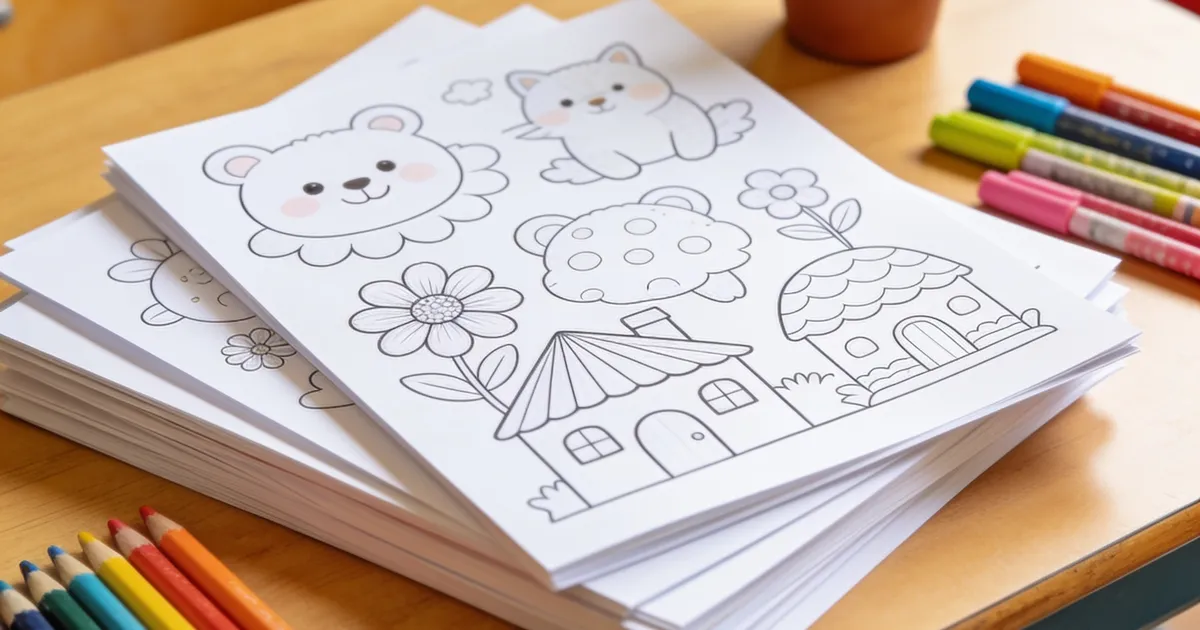

The best printable coloring pages for preschool use large, simple shapes with thick outlines—ideally 2pt or wider—so little hands can color inside the lines without frustration. On koloring.ai, look for pages tagged "easy" with an age range of 3-5, like the cartoon-style designs created specifically for first-time colorers. Choosing the right page at this stage isn't just about keeping your child busy; it's about building the fine motor confidence that leads to writing.
Preschoolers don't need 350 options—they need about 15 pages they love and will color again and again. The goal at age three is grip, not accuracy. You want pages where success is almost guaranteed so your child asks to do it tomorrow.
What Makes a Coloring Page Right for a Preschooler?
A preschooler-ready page has three non-negotiable features: thick outlines, blank backgrounds, and a single bold subject. You want a coloring area roughly the size of your child's palm. Anything smaller requires a precision their hands don't yet have, and anything too detailed causes the kind of frustration that ends with a crayon thrown across the kitchen.
The cartoon style on koloring.ai uses bold 2pt outlines that create natural "walls" for developing motor control. These thicker boundaries help children stay inside the lines with less effort, which builds confidence fast. According to NAEYC, process-oriented art activities like coloring strengthen the small muscles needed for self-care tasks like buttoning and zipping at this developmental stage.
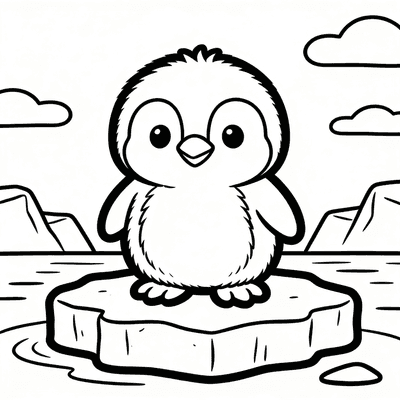
Look for pages with a single animal, vehicle, or shape rather than busy scenes. A Baby Penguin Standing on an Ice Block works better than an underwater reef with twelve different fish. You can always add complexity later—right now, the win is finishing a whole page and feeling proud.
Unique tip: Tape the coloring page to the table with painter's tape. A sliding paper is the hidden enemy of preschool coloring. When the page stays put, your child can focus entirely on moving their hand instead of chasing a spinning sheet.
How to Choose Between Easy Preschool Pages and Detailed Sheets
Easy pages build confidence—detailed pages build stamina. For children ages 2-4, stick exclusively to easy pages with minimal elements. For pre-kindergarteners approaching age 5, you can introduce one medium-difficulty page per week to stretch their attention span gently.
An easy page like Alphabet with Animals (A-Apple, B-Bear Style) gives a preschooler a complete coloring experience in under five minutes. A medium page like Beautiful Monarch Butterfly with Detailed Wings might take two or three sittings. Pay attention to which type your child requests more often—that's your compass.
The PBS Parents activity finder confirms that matching a coloring page to a familiar character or animal increases a child's willingness to finish the whole page. A dinosaur-loving three-year-old will work three times longer on a triceratops than on a random flower, purely because they care about the outcome.
This balance matters because if you jump to detailed pages too early, your preschooler learns that coloring is "hard." Keep the hard pages in a separate folder and let them graduate up when they ask. For a broader selection of easy pages, browse the full collection of free printable coloring pages for kids.
Five Ways to Make Preschool Coloring Pages a Learning Tool
Coloring and conversation always go together at this age. A coloring page is a great chance to build vocabulary, practice counting, or introduce a letter sound without any academic pressure.
First, name everything while you color together: "You're making that penguin's beak orange—what sound does a penguin make?" Second, count out loud as they switch colors: "That's four different colors on your butterfly so far." Third, use a page like Heart-shaped Rainbow with Stars to sort crayons into warm and cool color families.
Fourth, position pages as storytelling prompts. When your child finishes a Cute Baby Unicorn Sitting on a Cloud, ask: "What does that unicorn eat for breakfast?" You'll get three-sentence creative narratives that reveal far more about their thinking than any worksheet could. Fifth, practice direction words: color the top of the rainbow, the bottom of the page, next to the star.
Free printable coloring pages and creative ideas, straight to your inbox.
No spam. Unsubscribe anytime.
The early learning experts at ZERO TO THREE note that simple, back-and-forth interactions during everyday activities build the brain architecture for school readiness. Coloring paired with your narration packs more learning into ten minutes than an hour of solo tablet time.

What Supplies Work Best with Printable Pages for Preschoolers?
Triangular crayons are the single best supply choice for preschool coloring pages. Their shape forces a three-finger tripod grip naturally, without the nagging reminders that make kids tune out. Standard round crayons let a child wrap their whole fist around them, skipping the finger-strengthening opportunity entirely.
For markers, choose the washable chunky kind with a cone-shaped tip. Regular thin markers push through printer paper and ruin the table underneath—plus, the tight cap removal frustrates preschoolers who can't yet pinch hard. The cone tip markers from Melissa & Doug or Crayola's My First line are worth the small markup for the independence they create.
Your paper choice matters too. Standard 20lb printer paper works fine for crayons but tears easily when a preschooler presses too hard. If your child is a heavy-handed colorer, bump up to 24lb or 28lb paper, or slide a piece of cardstock underneath the page as a backing board. For more detail on choosing art supplies, see the guide to best crayons, markers & colored pencils for kids.
Unique tip: Cut the page in half before handing it over. Break a full-page printable into quarters and give a preschooler one quarter at a time. A small section feels achievable. A full 8.5x11 page can look like an hour-long assignment to a three-year-old, and they'll abandon it halfway through.
How Parents Use Camera Tracing to Bridge Coloring and Drawing
The gap between coloring a printed page and drawing independently is wide. Kids often freeze when presented with a blank sheet. The Camera Trace & Sketch tool creates a bridge between the two skills by projecting a light outline onto paper so your child can trace it before coloring.
Here's how it works in practice: you select a simple image—say, a star or a fish—on the tool, prop your phone or tablet upright on the table, and the outline appears on the paper below. Your preschooler traces the glowing lines with a crayon, then colors the shapes they just drew. It is a guided drawing experience that feels magical to them and builds the visual-motor coordination needed for letter formation.
The step-by-step process for setting this up with your child is covered in the guide to tracing coloring pages on paper with Camera Trace & Sketch. Many parents find that ten minutes of AR tracing once or twice a week noticeably improves a preschooler's willingness to attempt freehand drawing afterward.
If you want pages sized and styled specifically for the 2-4 age group, the toddler coloring pages guide walks through the best categories to start with. The right image complexity makes the difference between a tool that excites and one that overwhelms.
Frequently Asked Questions
Can toddlers use coloring pages?
Yes—toddlers as young as 2 can start with easy coloring pages that have thick outlines and large shapes. Look for pages rated "easy" with an age range of 3-5 and a single bold subject like Smiling Star with a Cute Face in the Night Sky. Start with chunky crayons rather than markers and expect scribbling outside the lines—that's a normal and necessary stage of motor development.
How many coloring pages should a 3-year-old do at once?
One page, possibly two if the first took under three minutes. A three-year-old's focused attention span averages 3-5 minutes, so print a page that matches that duration. Keep a folder of 10-15 preschool coloring sheets ready, but let your child choose which one to do each time—autonomy at this age drives engagement more than novelty does.
What do I do when my preschooler only scribbles and won't stay in the lines?
Let them scribble and don't correct it. Scribbling is building hand strength and exploring cause-and-effect, which are prerequisite skills for controlled coloring. Offer pages with built-in color guidance like Heart-shaped Rainbow with Stars where each colored band is its own wide stripe. Compliment the effort, not the accuracy—"You filled the whole page with color!" works better than "Try to stay in the lines next time."
Browse our 150+ free printable coloring pages for kids and let your preschooler pick their first page—no signup, no email, just a silly penguin or a smiling sun waiting to become fridge art.
Free printable coloring pages and creative ideas, straight to your inbox.
No spam. Unsubscribe anytime.