Coloring for Adults — Mental Health Benefits
By Koloring Editorial Team
Coloring isn't just for kids — it's a research-backed way for adults to lower stress, ease anxiety, and find a meditative moment in a busy day. This article shows parents how to use coloring for their own mental health, with practical tips for weaving it into family life and choosing the right
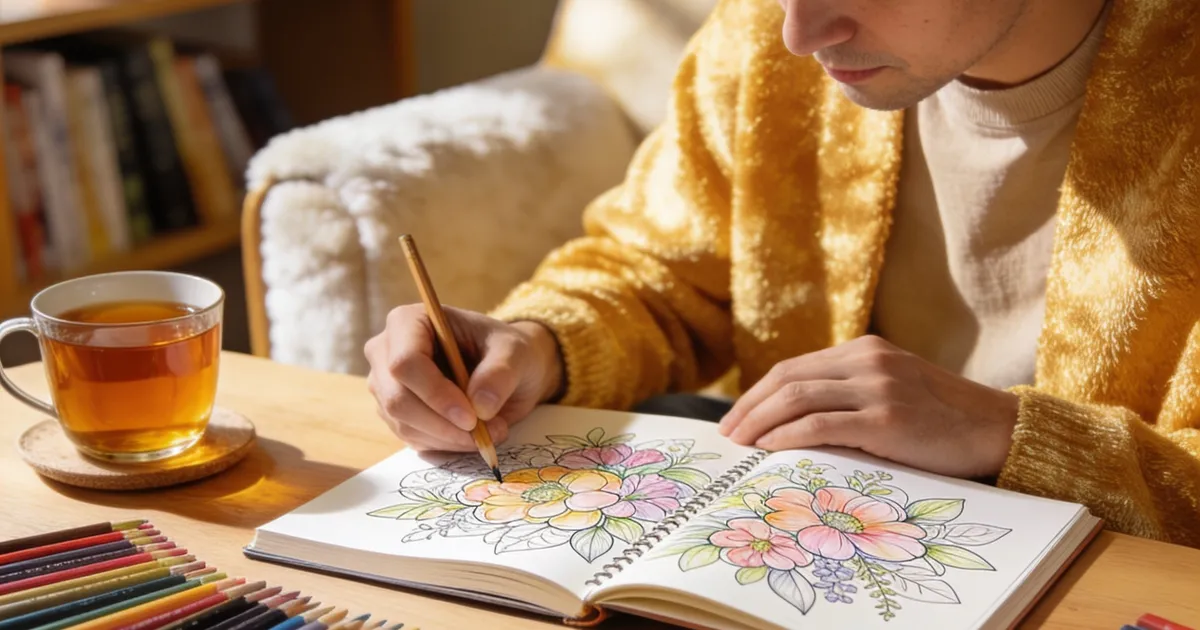

Coloring isn't just a childhood pastime — it's a research-backed mental health tool for adults that lowers cortisol, eases anxiety, and creates a meditative state in as little as 10 minutes. The same focused, repetitive motion that calms a restless toddler works on an overworked parent's nervous system, too. When you pick up a coloring page alongside your child, you're not just keeping them busy — you're actively managing your own stress and modeling emotional regulation in real time.
Why Does Coloring Help Adults Manage Stress?
Coloring quiets the brain's fear center by shifting attention to a predictable, low-stakes task. The act of choosing colors and filling in shapes engages the prefrontal cortex — the part responsible for decision-making and focus — while dialing down activity in the amygdala, which triggers fight-or-flight responses. This is why many therapists now recommend coloring as a grounding exercise for anxiety and panic.
The key is repetition without pressure. Unlike painting or free drawing, coloring doesn't demand creative decisions from scratch. The lines are already there, so your brain can slip into a flow state faster. Many parents find that spending 10 minutes on an adult-level mandala after the kids are in bed resets their mental state more effectively than scrolling through a phone.
Tip you won't find elsewhere: Use the AI coloring page creator to turn a calming personal photo — like a favorite vacation spot or a peaceful garden — into a custom coloring page. Familiar, positive imagery amplifies the relaxation response because your brain associates the scene with safety. Print a few copies and keep them in a "parent calm-down kit" for high-stress moments.
How Can Parents Use Coloring for Their Own Mental Health?
You don't need a silent studio or an hour of free time. The most practical approach is to weave coloring into the cracks of your day — while waiting for dinner to cook, during a child's nap, or as a wind-down ritual before bed. Even five minutes of coloring lowers cortisol measurably, according to a 2016 study published in the Journal of the American Art Therapy Association.
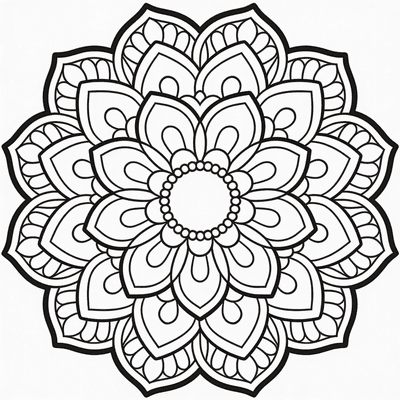
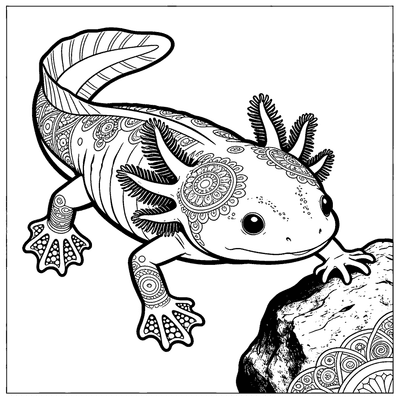
The trick is to choose pages that match your energy level. On high-anxiety days, intricate patterns like the Lotus Mandala with Detailed Symmetrical Design absorb more mental bandwidth and leave less room for rumination. On low-energy days, simpler pages with larger spaces — like the Axolotl Swimming Near a Rock — feel soothing without being demanding.
Tip you won't find elsewhere: Pair coloring with a sensory anchor. Brew a specific herbal tea, light a candle, or play the same instrumental track every time you sit down to color. Over a week or two, your brain begins to associate that sensory cue with the relaxation response, making it easier to drop into a calm state on command. This is classical conditioning applied to adult coloring, and it works surprisingly fast.
What Are the Benefits of Coloring Together as a Family?
Shared coloring sessions do double duty: they give you the mental health benefits of coloring while strengthening your connection with your child. When you sit side-by-side, both focused on your own pages, you're practicing parallel play — a concept from child psychology that builds trust and closeness without the pressure of constant conversation. For kids who clam up when asked direct questions, coloring together often opens the door to organic chats about their day.
It also models something powerful. Your child sees you managing stress with a quiet, creative activity instead of snapping or zoning out on a screen. That's a lesson in emotional regulation that no lecture can deliver. The Benefits of Coloring for Children's Development are well-documented, but the parent-child dynamic adds a layer that solo coloring can't replicate.
Free printable coloring pages and creative ideas, straight to your inbox.
No spam. Unsubscribe anytime.
Tip you won't find elsewhere: Use the [Camera Trace](https://koloring.ai/Camera Trace/) feature to project a family photo onto paper and trace it together as a collaborative line drawing. Then each person colors a section. The resulting artwork becomes a shared project that captures a memory, and the tracing step adds a novel sensory element that keeps both kids and adults engaged longer than a standard printout.
Can Coloring Help with Parental Burnout?
Yes — specifically because it requires zero productivity. Parental burnout is fueled by the relentless feeling that you should be doing something useful. Coloring is deliberately non-productive. Nobody grades it, optimizes it, or monetizes it. That's precisely why it works.
When you color, you give your brain permission to exist in a state that isn't about achieving or fixing. The Coloring as Therapy — Benefits for Kids with Anxiety post explains how this works for children, but the same principle applies to adults. The absence of a performance metric is the point.
Tip you won't find elsewhere: Create a "no-kids-allowed" coloring ritual once a week. Use the story coloring books feature to generate a short narrative-based coloring book just for you — something whimsical or nostalgic that has nothing to do with parenting. Guard that 20-minute window fiercely. The anticipation of a creative escape that belongs only to you can be as restorative as the coloring itself.
Choosing the Right Tools for Adult Coloring
The tools matter more for adults than for kids. Thin, waxy crayons feel unsatisfying and can actually increase frustration. Instead, try colored pencils with soft cores — they glide smoothly and allow for shading, which deepens the meditative quality of the activity. The Best Crayons, Markers & Colored Pencils for Kids (2026) guide covers options that work well for adults, too, especially the pencil recommendations.
For digital coloring, the color online tool on koloring.ai offers a bucket-fill feature that's surprisingly satisfying. The cartoon style pages use bold 2pt outlines that make digital coloring clean and frustration-free, even on a phone screen. This is especially handy for parents who want to color during a commute or while waiting in the school pickup line — no supplies needed.
If you prefer physical pages, the turn a photo into a coloring page tool lets you generate custom prints from your own images. A photo of a peaceful moment — a sunrise, a garden, a sleeping pet — becomes a personalized stress-relief page that carries emotional weight.
Frequently Asked Questions
Is coloring effective for adult anxiety?
Yes — coloring reduces anxiety by occupying the brain's visual and motor systems simultaneously, leaving fewer cognitive resources available for worry loops. The structured nature of coloring provides a sense of control that counteracts the helplessness often felt during anxious episodes. For best results, choose pages with repeating patterns, like mandalas, which have been specifically studied for their anxiety-reducing effects.
How often should adults color for mental health benefits?
Consistency matters more than duration. Ten minutes daily produces better stress-reduction outcomes than an hour once a week, because the nervous system learns to anticipate and respond to the calming ritual. Many parents find that a short coloring session right after the kids' bedtime creates a reliable transition from "parent mode" to "personal time," signaling to the body that the high-alert phase of the day is over.
Can coloring replace meditation for stress relief?
Coloring isn't a replacement for meditation, but it's an accessible alternative for people who find silent sitting difficult. The rhythmic, repetitive motion of coloring activates the same parasympathetic nervous system response as a breathing exercise, with the added benefit of a tangible, visual result. For parents whose minds race during traditional meditation, coloring provides a gentle focal point that achieves a similar physiological calm.
Browse the full collection of free printable coloring pages and pick one just for yourself — no signup, no kid approval required. Your mental health is worth 10 minutes of color.
Free printable coloring pages and creative ideas, straight to your inbox.
No spam. Unsubscribe anytime.