How Coloring Helps Kids with ADHD Focus
Coloring gives kids with ADHD a concrete way to practice sustained focus and emotional regulation. This guide shows you which page types work best, how to build a short daily coloring ritual, and simple tweaks — like a visual timer and bold-outline designs — that keep frustration low and engagement


Coloring helps children with ADHD build sustained focus by engaging the brain in a structured, low-pressure creative task. The repetitive motion of filling in shapes lowers mental noise and trains attention span, and even short sessions of 10–15 minutes can improve impulse control. For parents, it’s a simple, screen-free tool you can use right at the kitchen table when focus feels scattered.
You don’t need a clinical setting to see results. A Scholastic article on the benefits of coloring confirms that coloring trains the brain to concentrate and strengthens fine motor coordination. What makes coloring uniquely helpful for ADHD is that it offers immediate visual feedback — a partly filled page — which motivates kids to stick with the task longer than they might with a worksheet.
How Does Coloring Help Children with ADHD Focus?
Coloring acts as a grounding activity that reduces stimulus overload and helps the brain shift into focused attention. The act of choosing colors and staying inside the lines requires just enough cognitive effort to quiet racing thoughts without being mentally exhausting.
When a child with ADHD sits down with a coloring page, the structured boundaries — outlines that define a clear start and finish — provide a sense of predictability. This predictability lowers anxiety and gives the brain a break from decision-heavy or open-ended tasks that can trigger frustration. Over time, regular coloring sessions can stretch a child’s attention span because the brain learns to sustain engagement through a complete, simple goal: finish the page.
One of the most effective ways to make coloring a successful focus tool is to use a visual timer. Set a sand timer or a time-tracking app where the child can see the minutes counting down — not to create pressure, but to show exactly how long the session lasts. Many parents find that a 10-minute coloring block right after school gives their child a calm reset before homework begins, transforming the post-school crash into manageable quiet time.
The broader developmental benefits of coloring also support this. For a deeper look at how coloring supports fine motor skills and emotional regulation, read about the benefits of coloring for children’s development.
What Types of Coloring Pages Support Focus for Kids with ADHD?
The best coloring pages for ADHD focus are ones with clear, bold outlines, larger open areas, and patterns rather than chaotic scenes. Pages with too many tiny, intricate details can overwhelm and cause a child to abandon the activity. You want designs that invite completion and feel doable in one sitting.
Mandala-style pages with repeating symmetrical shapes are especially powerful. The circular repetition naturally guides the eye and hand, creating a rhythm that deepens concentration. On koloring.ai, the circular mandala with flower petals pattern and the geometric mandala with intricate star design offer structured designs that kids can work through section by section, which breaks a big picture into smaller, focus-friendly chunks.


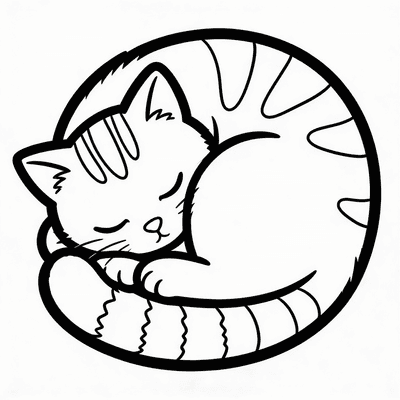
For younger children or those who get frustrated quickly, simpler animal pages work better. Look for images rated “easy” with an age range of 3–5, like the cute sleeping kitten curled up in a ball. The outline style uses bold 2pt strokes, which works perfectly for bucket-fill coloring apps and reduces the precision stress that can derail focus. You can browse hundreds of such coloring pages and sort by difficulty to match your child’s current attention span.
A unique tip that helps ADHD kids settle into the activity: let them complete the same page across multiple sessions using a different color palette each time. Revisiting a familiar outline lowers the novelty demand on the brain and allows the child to go deeper into the coloring process without the distraction of figuring out a new picture.
If you’re looking for even more screen-free focus activities that complement coloring, check out the list of 10 screen-free activities for kids.
Simple Ways to Turn Coloring into a Daily Focus Ritual
Consistency is what turns coloring from a one-time distraction into a genuine focus-building habit. Tying coloring to an existing part of the day — such as after lunch or during the wind-down before bedtime — helps the brain anticipate and accept the quiet time.
The right tools matter just as much as timing. Choosing crayons or markers that feel smooth and don’t break easily prevents sensory frustration. A good starting point is the roundup of the best crayons, markers & colored pencils for kids. Pair quality supplies with a mess-free digital option when you’re on the go; the color online tool gives children the same outlining and filling experience from a tablet, which can be a lifesaver in waiting rooms or during travel.
One underrated strategy is to combine coloring with rhythmic breathing or soft instrumental music. Before the crayon even hits the paper, do three slow belly breaths together. The breathing signals the nervous system to downshift, and the coloring then sustains that regulated state. This pairing is especially helpful for kids whose hyperactivity spikes in the late afternoon.
If your child enjoys turning artwork into new adventures, you can build even deeper engagement by letting them turn their coloring page into a custom coloring book or even turn a photo into a coloring page of a favorite memory — like a pet or a family outing. When the subject matter feels personal, focus naturally follows.
Frequently Asked Questions
Can coloring replace ADHD medication or therapy?
No, coloring is not a substitute for prescribed medication or professional therapy. It is a complementary activity that helps strengthen attention, provides sensory regulation, and offers a calming routine. Many families use coloring alongside other strategies to manage daily focus challenges, but always follow the guidance of your child’s healthcare provider.
How long should a child with ADHD color to see improvements in focus?
Start with just 5 minutes and work up to 15 minutes as their stamina grows. The key is consistency — a short daily session is more effective for building sustained attention than a long, infrequent one. Let your child’s engagement guide the duration, and stop while the activity still feels positive rather than waiting for restlessness to set in.
What if my child refuses to color or gets upset when they go outside the lines?
Offer a choice between two very simple pages before you start; ownership reduces resistance. If going outside the lines triggers frustration, switch to a page with thick outlines (bold 2pt lines) and bigger sections, or use a digital bucket-fill tool that snaps color into isolated areas automatically. The goal is completion and calm, not perfection — celebrate the finished page, not the precision.
Browse all free pages by difficulty level and let your child pick their first focus-friendly page — no signup needed — over in the coloring pages library.
Free printable coloring pages and creative ideas, straight to your inbox.
No spam. Unsubscribe anytime.