Why Coloring is Better Than Screen Time
By Koloring Editorial Team
Coloring engages your child's brain actively — making decisions, building hand strength, and processing emotions — while screens keep them in passive receive mode. Even 15 minutes of daily coloring measurably improves pencil grip and focus. Learn simple swaps that make the transition easy.
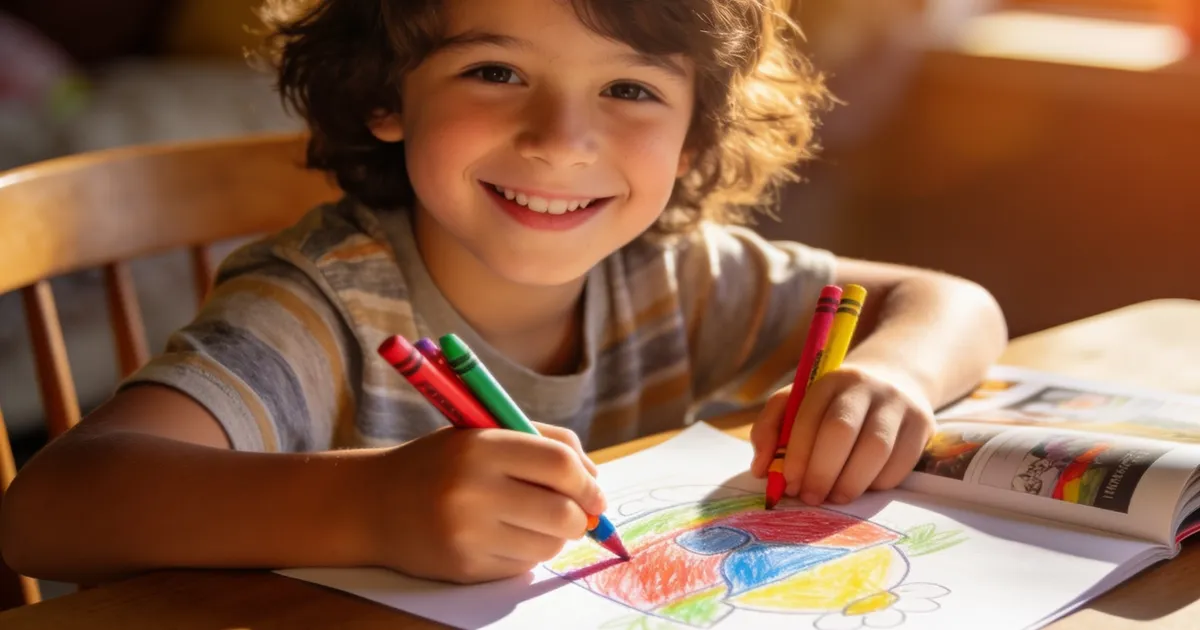

Coloring gives your child the same fine-motor workout as tapping and swiping — but adds emotional regulation and sensory feedback that screens simply can't replicate. Research from Zero to Three confirms that young children learn best through hands-on interaction with physical materials, not passive digital consumption. That doesn't mean you have to feel guilty every time your kid grabs the tablet — it just means mixing in coloring time changes how their brain absorbs and processes information.
Why Does My Child Zone Out With Screens But Stay Calm With Coloring?
The difference comes down to active versus passive engagement. Screens deliver rapid-fire stimuli — flashing images, auto-play videos, instant reward loops. Your child's brain sits in receive mode.
Coloring flips that switch. A child holding a crayon has to make dozens of micro-decisions: which color, how much pressure, inside the line or out? This process activates the prefrontal cortex, the same area responsible for focus and impulse control.
Many parents tell us their kid melts down when screen time ends. That's a dopamine crash. Tablets and apps are engineered to trigger continuous dopamine hits, which feels great in the moment but leaves kids irritable and depleted after. Coloring provides a steadier, quieter satisfaction — finishing a page creates a sense of completion without the neurological whiplash.
For a quick transition tool, print an Alphabet with Animals page the night before and leave it on the breakfast table with three crayons. The page is already there, waiting — no loading, no login. By the time the tablet would have booted up, your child is already halfway through coloring the "B for Bear."
Screen Time vs Active Play: What Happens Inside Your Child's Brain
The American Academy of Pediatrics recommends no more than one hour of high-quality screen time per day for children ages 2-5. Yet a 2023 Common Sense Media census found the average toddler clocks over two hours.
Here's where coloring vs screen time becomes a real developmental fork in the road.
Screens hold attention by suppressing the brain's default mode network — the part that daydreams, processes emotions, and builds self-awareness. Coloring requires that network to stay fully online. When your child colors a Baby Unicorn with Rainbow Mane, they're not just filling in shapes. They're imagining the meadow. They're deciding whether the sky should be blue or purple. They're mentally building a world.
This is active meaning-making. It builds the same cognitive architecture that later supports reading comprehension, math reasoning, and creative problem-solving.
The National Association for the Education of Young Children emphasizes that technology can support learning — but only when balanced with hands-on exploration. One practical swap: use koloring.ai's color online tool as a halfway house. It's screen-based but requires the same decision-making and precision as crayons on paper, without the passive consumption trap of video-based media.

How to Replace 20 Minutes of Screen Time Without a Fight
Cold-turkey transitions rarely work with small children. A better approach is replacing, not removing.
Pick the same 20-minute window every day. Right after snack, or while dinner cooks. Instead of announcing "no tablet," set out a fresh page and supplies before you say anything. When your child arrives, the activity is already present and inviting.
This technique works because it sidesteps the negotiation loop. There's no empty space where the screen used to be — coloring fills it immediately. Learn more about building this habit in the full guide on the benefits of coloring for children's development.
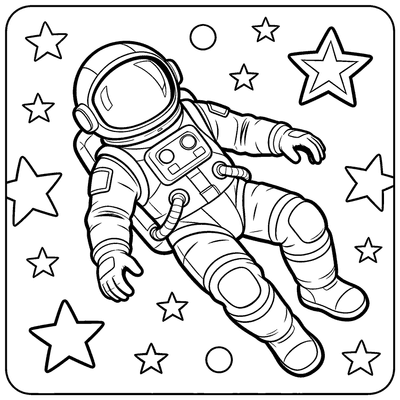
For children who strongly resist, try pages that mirror their screen interests. A kid obsessed with space videos will gravitate toward the Astronaut Floating Among the Stars page. The familiar content bridges the gap while the hands-on format retrains their brain to accept slower, deeper engagement.
The 10 screen-free activities guide offers additional swaps, but coloring is consistently the easiest entry point. It doesn't require supervision once supplies are out, and it doesn't create mess that requires parental cleanup.
Does Coloring Work the Same Hand Muscles As Using a Tablet?
No — and this matters more than most parents realize.
Swiping and tapping on a tablet uses gross finger movements and very little grip strength. Coloring with crayons or pencils requires the tripod grasp, which engages all three fingers that will later support fluent handwriting.
Occupational therapists call this the difference between distal and proximal control. Screens train distal movements — isolated finger taps. Paper-and-crayon coloring trains proximal stability — whole-hand coordination starting from the shoulder and wrist.
This is why many kindergarten teachers report an increase in children arriving without the hand strength to hold a pencil properly. The American Occupational Therapy Association has raised concerns about declining fine motor readiness linked to early touchscreen overuse.
A practical page for building this grip is the Cute Cartoon Car with a Smiling Face. Its large, simple shapes with bold outlines let a three-year-old practice broad strokes without precision pressure, building the foundational muscles naturally. Our cartoon style uses bold 2pt outlines perfect for bucket-fill and broad crayon strokes.
Free printable coloring pages and creative ideas, straight to your inbox.
No spam. Unsubscribe anytime.
Pair this with the best crayons and markers guide to pick triangular crayons that force the tripod grip by design — double-layered skill building without a single instruction from you.
Can Coloring Trigger the Same Reward Feeling As a Tablet?
Yes — and once you understand how, you can make coloring feel genuinely competitive with screen time.
Tablets reward kids with instant feedback: a ping, a level-up, a funny animation. Coloring's reward cycle is slower but deeper. Finishing a page creates intrinsic pride — "I made that" — rather than external validation from an algorithm.
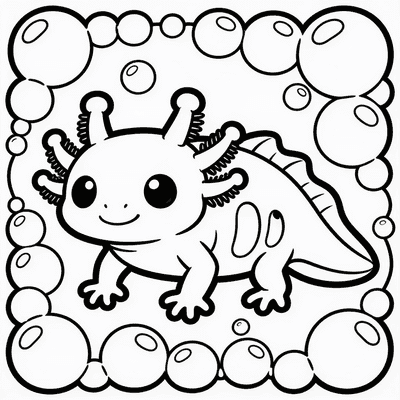
To accelerate this reward loop, display your child's finished pages immediately. Tape the completed Cute Axolotl Smiling Among Bubbles to the fridge at child eye-level the moment they're done. One parent in our community snaps a photo and texts it to Grandma right away, so the child receives real social recognition within minutes.
This matters because the coloring vs screen time debate often misses the point: it's not about the activity itself, it's about what the child's brain learns to crave. Screens build dependency on external hits. Coloring builds tolerance for sustained effort and internal satisfaction.
The personalized coloring pages tool adds another layer — upload a photo of your pet dog and turn it into a coloring page. A child who resists generic pages will suddenly sit still for 30 minutes when they're coloring their own Golden Retriever.
Building Emotional Regulation — What Screens Can't Teach
Small children experience big emotions with limited vocabulary. Coloring provides a non-verbal outlet for processing feelings they can't yet name.
When your four-year-old aggressively scribbles black crayon over an entire page after a difficult morning at preschool, they're not wasting paper. They're doing sensory-based emotional discharge — the same thing adults do when they aggressively scrub dishes or go for a hard run.
Screens, by contrast, often suppress emotional processing. The child zones out, the feeling goes underground, and it resurfaces later as a meltdown over the wrong color cup.
A simple post-challenging-moment routine: "I put a new coloring page on the table whenever you're ready." No lecture. No demand to talk about feelings. Just access to a quiet, physical activity that naturally regulates the nervous system. The Mandala with Peacock Feather Pattern works particularly well for older children and even parents — its repetitive patterns exert a calming effect similar to adult coloring books.
For more structured emotional learning, the printable coloring pages for preschool classrooms guide covers how teachers use themed pages to help children identify and discuss feelings.
What Research Actually Shows About Coloring vs Screen Time Before Bed
Bedtime screen use is uniquely damaging to young children's sleep. The blue light suppresses melatonin production, but the bigger issue is cognitive arousal — the brain stays alert from stimulation even after the device is off.
The American Academy of Pediatrics recommends no screens for at least one hour before bed for children. Coloring during this window solves the "what do we do instead" problem elegantly.
It's screen-free by nature. It requires no bright overhead lights. And the rhythmic, repetitive motion of coloring naturally downshifts the nervous system toward sleep readiness. The Cute Owl Sitting on a Tree Branch at Night page fits perfectly into a bedtime routine — the nocturnal theme feels appropriate for evening, and the simple shapes don't overstimulate.
Parents who've swapped the pre-bed cartoon for 15 minutes of coloring report faster sleep onset and fewer bedtime battles. The key is consistency: same time, same spot, same calming activity. The brain learns to associate coloring with the transition to sleep, and regulation becomes automatic.
Frequently Asked Questions
Can coloring really replace screen time for a child who's addicted to the tablet?
It won't replace it overnight, but it can gradually displace it. Start with "coloring first, then tablet" rather than "no tablet." When your child learns that coloring happens before the screen, the screen becomes a reward rather than a default state. Over weeks, expand the coloring window and shrink the screen window. Many families land at a 50/50 split within a month using pages tied to the child's specific interests, like dinosaur coloring pages or unicorn pages.
At what age does coloring start working better than screens for keeping a child occupied?
Around age 2.5 to 3, most children develop enough hand control to actively enjoy coloring rather than just scribble and discard the page. Before this age, short-screen bursts are often more practical. By preschool age, a well-chosen coloring page often holds attention longer than a passive video because it requires active participation. The best coloring pages for toddlers guide breaks down what works at each stage.
Should coloring be a solo activity or something I do alongside my child?
Both are valuable, but for transitioning away from screens, start with side-by-side coloring. Sit next to your child with your own page — the Luna Sleeping in a Teacup from the cozy collection is genuinely enjoyable for adults. Your presence signals that this activity matters and is worth attention. Once coloring becomes an established habit, independent coloring builds sustained focus. Alternate between the two modes intentionally.
Browse all 400+ free pages organized by age and difficulty — your child can pick their first sheet right now, no signup needed: start coloring free.
Free printable coloring pages and creative ideas, straight to your inbox.
No spam. Unsubscribe anytime.