Coloring in the Classroom — A Teacher's Guide
By Koloring Editorial Team
Coloring activities in classrooms are far more than quiet time. They build the fine motor foundation for handwriting, teach sustained focus, and provide a calming group ritual that supports social-emotional learning. Research from NAEYC, PBS KIDS, and Scholastic confirms what experienced teachers
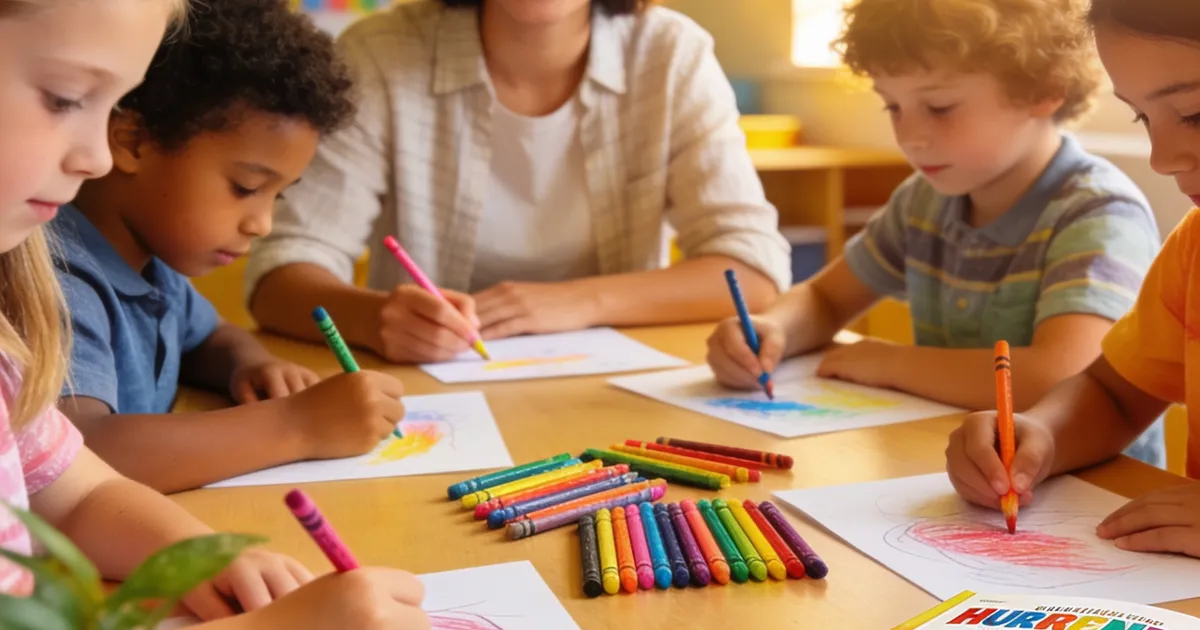

Coloring activities in the classroom build the fine motor foundation children need for writing, teach sustained focus, and give kids a calm, shared ritual that regulates emotions. A NAEYC review confirms that daily art-based fine motor work—including coloring—meaningfully improves pencil grip and control in preschoolers. If you have ever wondered whether those ten minutes of quiet coloring are “real” learning, the answer is yes: they are wiring young brains for literacy, self-regulation, and collaborative attention.
What Developmental Skills Do Coloring Activities in the Classroom Support?
Coloring builds three interconnected skill sets at once: fine motor precision, visual-motor integration, and sustained attention. When a child tries to stay inside a line, the small muscles of the hand, wrist, and fingers coordinate with the eyes in a process called visual tracking—the same skill they need for reading text from left to right. Occupational therapists call this a “heavyweight” pre-writing activity because it mimics the motor planning required for letter formation without the cognitive load of spelling.
You see the progression clearly in a classroom. A three-year-old grips a crayon with a full fist and scribbles across a simple flowers and butterflies page. By four, that same child holds the crayon with three fingers and deliberately fills the center of a shape. By kindergarten, they manage the tiny curves inside a letter tracing sheet. The coloring activity is the bridge.
Research gathered by PBS KIDS for Parents confirms that hands-on visual art activities build persistence, planning skills, and the ability to self-evaluate—all without flashcards or rewards. Teachers report that even the wiggliest students will sit for a high-interest coloring page, gradually extending their attention span.
Tip you won’t find everywhere else: Pair coloring pages with audiobooks. Reading a chapter aloud while children color doubles the cognitive benefit—the brain is absorbing language and narrative structure while the hands stay rhythmically busy. Many classroom teachers say this is the single most effective way to keep a group calm for 15–20 minutes.
How Do Coloring Activities Improve Focus and Self-Regulation?
A coloring activity is a self-contained, predictable task with a clear start and end—exactly what an overstimulated child’s nervous system craves. For children who struggle with transitions or sensory overload, five minutes of coloring after recess or right after lunch functions as a “soft landing.” The repetitive motion of coloring back and forth activates the parasympathetic nervous system, lowering heart rate and giving the prefrontal cortex time to come back online.
Beyond regulation, coloring develops intrinsic focus. Unlike screen activities—which capture attention through rapid scene changes and sound effects—a black-and-white drawing asks a child to generate the interest. That small act of filling an empty space trains the sustained-attention circuits that are essential for reading comprehension and math problem-solving later on. According to Scholastic, coloring and drawing nurture creativity while also encouraging the kind of focus that carries into academic tasks. The child learns, “I can look at this picture, make a choice, and see it through.”
For classrooms with a wide range of abilities, this is powerful. A child who cannot sit through a circle time discussion may color for ten uninterrupted minutes. That success builds self-concept: “I am a person who finishes things.”
Tip you won’t find everywhere else: Introduce a “finish-your-own” page. Provide a coloring sheet that is only 60% drawn—for example, a half-empty garden or a spaceship missing controls—and ask kids to draw and color the rest. This bridges coloring into creative writing while keeping the regulation benefit intact.
Why Are Coloring Activities a Social-Emotional Tool?
Coloring is one of the few classroom activities where children can sit side by side, each in their own world, yet part of a shared rhythm. That gentle parallel play builds social comfort without demanding constant interaction—ideal for shy children or those still developing conversational skills. Over time, you start to see spontaneous conversations: “Can I borrow the green?” “I’m making my dragon blue.” These small exchanges are the earliest building blocks of peer collaboration.
Coloring activities also provide a safe entry point for emotional expression. Many young children lack the vocabulary to name their feelings, but they will reach for a black crayon on a difficult day or fill a cute heart family holding hands page with bright colors when feeling happy. A classroom teacher can note these choices as a gentle window into a child’s internal state—not diagnostic, just observant.
For classrooms working on social-emotional learning (SEL) curriculum, a full guide to benefits of coloring for children’s development covers the research on how creative activities support empathy and self-awareness. Pairing a specific coloring page with a “feelings check-in” gives children a concrete way to show, not just tell, what is going on inside them.
Tip you won’t find everywhere else: Create a collaborative mural coloring page. Print a single large image—like a solar system with planets in a row—across nine sheets of paper and assign each child one section. The class must communicate about colors and placement to make the whole picture work. This teaches negotiation without a lesson plan labeled “negotiation.”
Can Coloring Activities Reinforce Academic Content?
Yes—coloring activities are a stealth vehicle for curriculum delivery. The key is matching the page to the learning target rather than using coloring purely as busy work. Coloring reinforces content through dual coding: the act of coloring an object while simultaneously hearing or reading about it creates two memory pathways, which strengthens recall.
Free printable coloring pages and creative ideas, straight to your inbox.
No spam. Unsubscribe anytime.
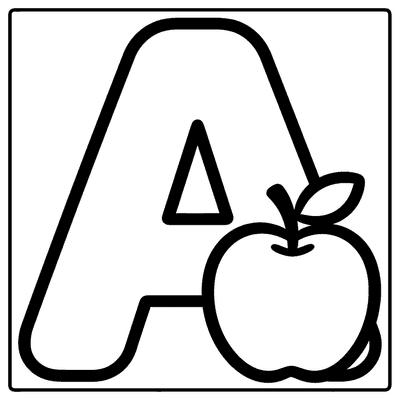
A first-grade teacher introducing the water cycle might use a page showing evaporation, condensation, and precipitation. As students color each stage, they are processing the concept through a different modality. Similarly, an alphabet with animals page reinforces letter-sound correspondence as a child colors “A is for Apple, B is for Bear.” The color choices themselves become memory triggers: “Remember, the ocean part was blue.”
Math teachers use coloring sheets with numbered sections for color-by-number activities that drill addition and subtraction facts. Geography teachers use flag coloring pages to build country recognition. The principle is always the same: physical engagement with the concept deepens learning. For a larger collection of classroom-ready material, printable coloring pages for preschool classrooms offers a range of educator-sorted options.
You do not need a specialized curriculum to make this work. A simple autumn squirrel holding an acorn page, paired with a read-aloud about seasonal change, turns an abstract concept into something placed and colored on the page.
What Age Should Structured Coloring Activities Begin?
Around age two and a half to three, most children are developmentally ready for simple coloring activities in a classroom or group-care setting. At this stage, the goal is not staying inside the lines—it is exposure to tool grip and the very concept of mark-making on a defined space. Toddler coloring activities should use pages with thick outlines, large open shapes, and subjects the child recognizes, such as the baby penguin standing on an ice block page.
Between ages three and four, you can expect deliberate color choices and some attempt to fill specific areas, though overruns are still the norm. By age five, many children can manage medium-detail pages and may start to create patterns and color schemes. The broader resource on coloring pages for children details these age-and-stage expectations more thoroughly.
Tip you won’t find everywhere else: For pre-writing classrooms, place coloring pages inside large, clear sheet protectors and let children color with dry-erase markers. The vertical orientation (taped to a wall or easel) strengthens shoulder and wrist stability, which directly supports handwriting development. Plus, the pages are reusable.
What Do Teachers Need to Know About Coloring Activity Design?
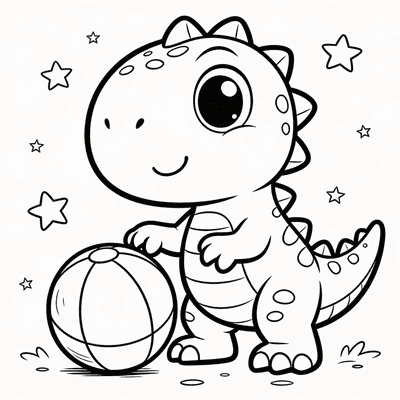
Not all coloring pages are equal in a classroom setting. The best classroom coloring activities have clear, bold outlines—our cartoon style, for instance, uses 2pt outlines that are forgiving for bucket-fill techniques. Pages with excessive tiny details frustrate early learners, while pages that are too simple lose the interest of older students. The sweet spot for ages 4–7 is a recognizable main subject with some detail but no overly fine elements.
Line quality matters more than most people realize. Thin, wispy lines are harder for young eyes to track and for developing motor control to follow. Pages designed with consistent line weights reduce cognitive fatigue, meaning students color longer and with more engagement.
Teachers also benefit from variety within a theme. Rather than printing the same page for every student, offering three versions of a related image—say, three different cute baby dragon pages—gives children a sense of choice and ownership. This small autonomy significantly increases task engagement.
Tip you won’t find everywhere else: Keep a “challenge corner” in your coloring station. Include 4–5 pages rated at a difficulty one step above the class average. A few children will gravitate toward the harder images, and their persistence often astonishes the adults in the room. This works especially well with patterns found in mandala designs.
What Supplies Make Classroom Coloring Activities Successful?
Crayons are the standard for a reason. They require the most pressure, which builds hand strength, and they come in colors that are easy to name and sort. For beginners, triangular crayons are worth the investment—they naturally encourage a tripod grip and do not roll off desks. Our best crayons, markers, and colored pencils guide breaks down brands by age and grip type.
Washable markers introduce less resistance on the page and are excellent for children who fatigue quickly during fine motor tasks, but they should alternate with crayon work so that hand strength continues to develop. Colored pencils are best saved for ages six and up, when the pressure control required for smooth coverage is more established.
For classroom efficiency, store supplies by color family rather than by type. A bin of “warm colors” (reds, oranges, yellows) and a bin of “cool colors” (blues, greens, purples) cuts decision paralysis and teaches color theory without a separate lesson. This small organizational choice also makes cleanup faster.
Frequently Asked Questions
How long should a coloring activity last in a classroom?
For preschoolers, 10–15 minutes is optimal. By kindergarten, many children can sustain 15–20 minutes of focused coloring. Let interest guide the duration—if the room is quiet and engaged, let the activity run longer. If restlessness sets in, wrap it up. Quality of engagement matters more than the clock.
Can coloring activities replace handwriting practice?
No, but they are an excellent supplementary pre-writing activity. Coloring develops the same fine motor muscles and visual tracking skills, but it does not replicate the precise stroke sequences of letter formation. Use coloring as a warm-up before handwriting practice rather than a replacement. Children who color daily tend to fatigue less during writing tasks.
Are coloring pages appropriate for older elementary students?
Yes, with the right difficulty level. Students in grades 3–5 often respond well to detailed coloring pages—like butterfly garden scenes or intricate animal illustrations—as a calm-down activity or indoor recess choice. At this age, coloring supports mindfulness and reduces anxiety before tests or after high-stimulation periods.
Browse our full library of 150+ free coloring pages and let your classroom find the page that makes every child want to pick up a crayon—no signup needed.
Free printable coloring pages and creative ideas, straight to your inbox.
No spam. Unsubscribe anytime.